


The Wakademy method
The didgeridoo is the amplifier of your body. Learning to play the didgeridoo is learning to observe yourself.
And this is precisely what I teach you at Wakademy.

90%
of didgeridoo players end up giving up
When enthusiasm gives way to weariness
Based on my experience, 90% of didgeridoo players end up giving up… for lack of time, of exchanges with other enthusiasts, or of technical background. That’s a lot, isn’t it?!
At the same time, I can understand why: teachers are almost non-existent, associations are (more than) rare, meetings between players stopped happening (or almost) a long time ago… And of course, if you are like most players, you are starting out all on your own.
So how can you know you’re on the right track? That you’re not picking up bad habits? Even worse, how can you tell the learning steps apart? Where to start? What rhythm to play? What to do and where to go?!
No wonder you feel a little lost!
An intuitive instrument? Yes, but not only!
When I began playing the didgeridoo at the end of 2001, very few players were aware of what was happening inside the instrument. Most played by feel, by intuition. We were stuck in the idea that “The didgeridoo is an intuitive instrument, so just let yourself go and it will come!”
…Well, you know what? That rarely works! It is even the reason why so many players give up. It’s exactly that vagueness that led me to teach the didgeridoo and to create Wakademy.
The didgeridoo is a real musical instrument, with its own laws, techniques, universe and culture…
I offer to guide you through this wonderful adventure, blending intuition with the strength of knowledge. And you’ll see, it’s all very concrete!
Note: I would like to take this opportunity to thank the Aboriginal Australians for sharing the didgeridoo, which has become the symbol of their cultures. Without them, you wouldn’t be reading these lines!
First pillar
The key that opens all the doors: body awareness
The sounds of the didgeridoo seem mysterious, intangible, so organic… but in reality, they are very concrete, because they all come from a part of your body!
On the didgeridoo, (almost) everything is invisible: all the techniques are “hidden” inside the body. So you are going to learn to “turn the camera” inwards, to observe what is happening inside you.
All of my teaching is based on this single principle: body awareness. Your body is the instrument. I will show you, concretely, how to tame:
- your lips
- your tongue
- your throat
- your belly
- your voice
Bring clarity inside to resonate better outside.
In practice, this means very precise sounds and simple articulations that are easy to reproduce. Together, they form a real language.
Learning the didgeridoo is learning a new language
On the didgeridoo, there are no scales or musical notes to deal with. In their place, we have a range of onomatopoeias and syllables. Together they form a common vocabulary.
Once you have learned your first onomatopoeias, you only have to articulate them and string them together to create words, then phrases.
And the good news is that as soon as you can speak, you can play.
And if you manage to let go while knowing the codes of the language, then it becomes truly magical: you have this marvellous sensation that the didgeridoo plays through you. You don’t need to be very advanced to experience this. You just need to know the way in.
Second pillar
Every rhythm written in Wakatoo
We don’t all learn the same way: some people need to see, others to hear, others to feel it in their body. I’m a visual learner myself, and I’ve noticed that many of my students are too: we learn more easily when we can read the rhythms. That’s why I invented Wakatoo, a card game to write didgeridoo rhythms in a playful way.
In every course, each recording comes with the written version of the rhythm in Wakatoo. So you can read it, hear it, sing it with me, then play it along with the audio recordings, at different tempos.
All the sounds of the didgeridoo in 4 categories
[wakatoo_daltonien]Turn on colour-blind mode?[/wakatoo_daltonien]
WA
Breathing
the moment you need to breathe in
ti
Simple sound
a simple sound to articulate
touf
Accent
an accented sound
kou
Voice
a sound played with the voice
All that’s left is to put the cards together to write a rhythm!


Wakatoo is the didgeridoo tablature: a card game to learn to read and write your rhythms, in a playful way.
And soon, Wakatoo also becomes an app.
The three steps that will turn you into a real musician
Learning the didgeridoo can be summed up in three complementary steps, going round in a loop:
Intuition
You play without overthinking, just for the fun of it, as naturally as possible.
Observation
By playing intuitively, a rhythm emerges. You have time to observe it and link that sound to the part of your body that produces it.
Knowledge
Once you have observed that the “TO” sound comes from your tongue tapping against your teeth, you can play it again, but this time consciously. And that changes everything!
Which in turn feeds your intuitive approach… The loop is closed!
This is the method I have used since I started to make progress on the didgeridoo. And believe me, it works without fail!
Once you have observed and felt the movement in your body, you reach real knowledge: the knowledge of experience. By far the most solid.
But on your own, it takes a long time. It took me 16 years to understand what gives a (really) clean and precise sound: moving the lower lip slightly forward. Yes, that one’s a gift! Nobody had explained it to me, and nobody will explain it to you anywhere else: it’s one of my own discoveries.
If you want to avoid spending years as I did, I offer you a clear path that makes sure you don’t get lost, by learning the techniques in “the right order”.
The Wakademy programme
A complete video programme
I guide you to master all the essential techniques, play solid rhythms and discover the unsuspected riches of the didgeridoo. Each course is one cycle of the programme. One cycle a year, or all at once: no exams and no schedule, you move forward at your own pace.
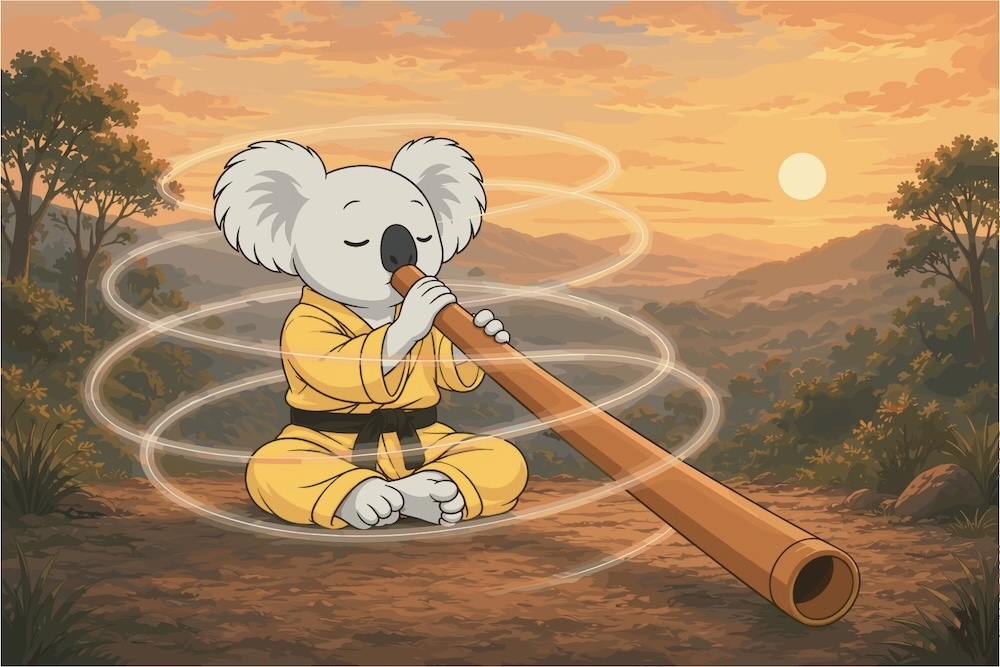
Preparatory
Circular breathing
Master circular breathing in 4 steps.


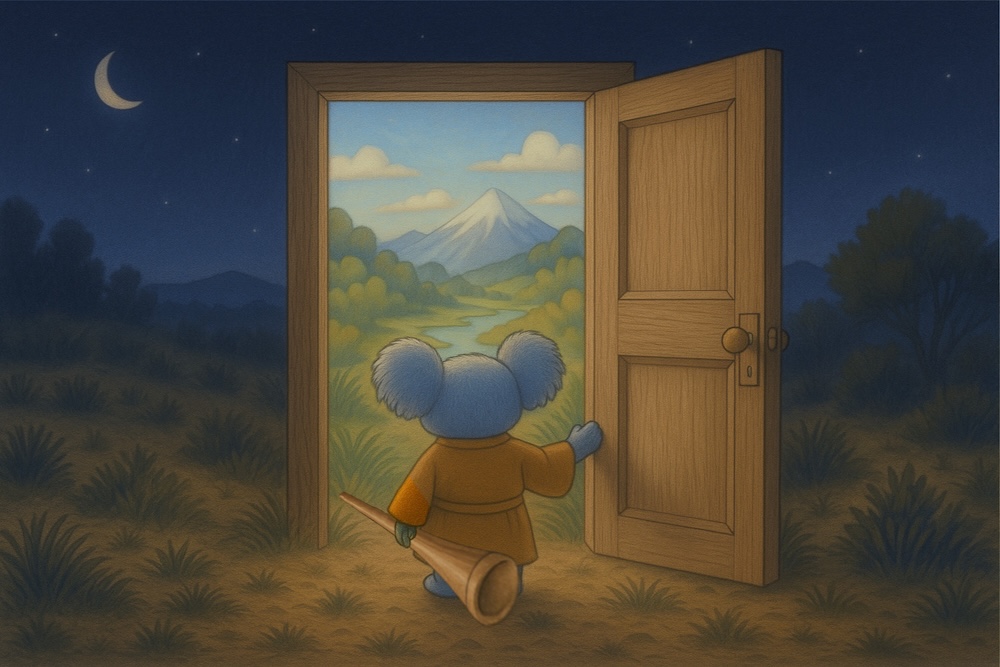
Cycle 2
The Secret of the 7 Breaths
The world of the different circular breaths, and how they shape your own playing.

Cycle 3
At the Heart of Rhythm
Coming soon
A solid rhythmic foundation: thinking rhythm on the didgeridoo within the constraint of circular breathing.

Cycle 4
The Bridge
Coming soon
Creating didgeridoo rhythms from beatbox rhythms. You start thinking about making music!
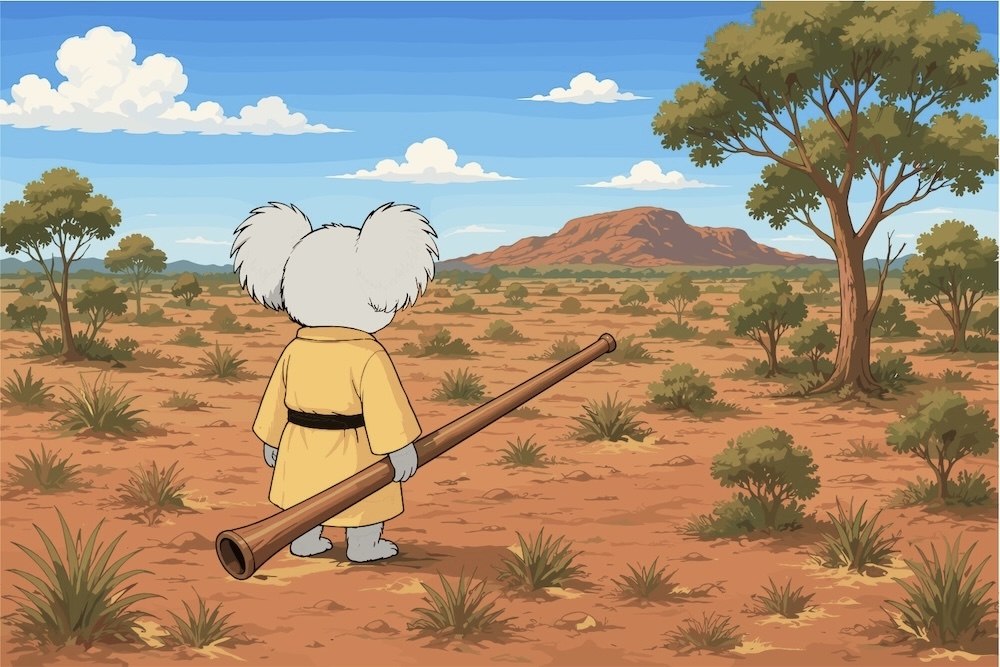
Traditional cycle
Back to the Origins
Coming soon
Traditional playing, a whole other world. The first level to begin with, with the same rigour.
Music can be learned. And you already have the essential: your breath.
Everyone knows how to breathe in rhythm. That’s the huge advantage of the didgeridoo: you have carried rhythm in your breath since the day you were born. All you have to do is make it resonate.
No need to be a musician
Before starting the didgeridoo, I was the anti-musician par excellence: no sense of rhythm, no ear… NOTHING, I tell you! But when I understood that the breath carries the rhythm, everything changed!
15 minutes a day
I recommend setting aside 15 minutes a day. And once you feel the benefits of playing, you will most likely find it hard to stop after 15 minutes: playing the didgeridoo is so relaxing, thanks to the breath!
I guide you
I’m not interested in just selling you a video course with no follow-up. Since 2018, 1,429 questions and answers under the videos have enriched the courses. When will you ask yours?
Forget the recipes
My goal is to give you a global understanding of the didgeridoo and to guide you on your own discovery of the instrument. So that one day, without even thinking about it, you play a rhythm that sounds like no other: yours.
Never forget that only you can express what you have to say.

My name is Gauthier Aubé
Passionate about the didgeridoo since late 2001 and founder of Wakademy, I have never stopped breaking down and analysing every movement, sound and rhythm of the modern didgeridoo since I started.
With hundreds of workshops led and thousands of students taught around the world, I continue my research with the same passion. My story
It’s high time to breathe!
In a world that is searching for itself a little more every day, let’s take the time to breathe and express what we have to share. It matters! Start with the free circular breathing course.