


Guide · Step by step
How to play the didgeridoo: a step-by-step guide for beginners
It’s not easy to start the didgeridoo! So I’ve gathered all my advice here, free to access, to help you start on the right foot.

Step 1 · 5 videos
Get your first sound and stabilize it
Before starting the circular breathing exercises, stabilize your sound, find your pressure and be able to switch from playing with puffed cheeks to playing with relaxed cheeks.
Your first sound
Practise without the didgeridoo first, with very relaxed lips. On the didgeridoo, not too tight: it is not a trumpet. And start your sound with a little “to”, it helps a lot.
Play from the front
Playing on the side is really tiring for your neck and your head. And it is much more difficult to speak with the side of your lips than with the front: try it!
Refine your sound
Two opposing forces shape your sound: the air you push with your stomach, and your lips keeping it inside. Find the good balance between them, a relaxing tension.
The 5 beginner mistakes
Playing on the side, blowing too much, rushing into circular breathing, puffing your cheeks all the time, moving everything instead of your tongue.
Get ready for circular breathing
Three things first: a perfectly straight drone, a powerful sound, and cheeks you know how to inflate and deflate.
“The 5 beginner mistakes” is in French: turn on the English subtitles.
A didgeridoo is really just an amplifier, nothing more, nothing less!
Step 2 · free course
Circular breathing
Those who manage to learn it in a few minutes all have one thing in common: they simply try.
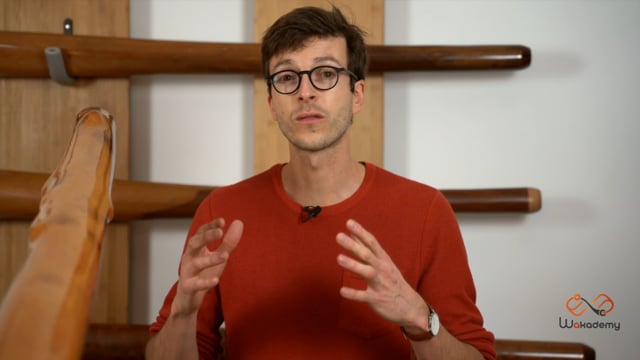
Free course
Master circular breathing
- 7 videos in 4 steps


No didgeridoo yet?Prices, pitfalls, woods, my selection: it’s all in the “Choosing a didgeridoo” guide.
They started just like you
★★★★★
“Videos are short, so we never get bored at all. They are very accessible and motivating, even for people who have never played the didgeridoo before!”
Quentin B., The art of the didgeridoo
“I mastered the basics of playing didgeridoo in my own living room. Thanks to your course, I was able to make that big step to circular breathing as well as master the basic sounds.”
Cyril, The art of the didgeridoo
“Very clear explanations with tangible examples in the videos, with emphasis on common errors which helps us understand the points we need to practice. And it works for us beginners sitting alone in front of our computers.”
Nina, The art of the didgeridoo
General advice
For all your playing
Take care of your mouthpiece
Round, even, 30 to 32 mm… and then leave it alone!
Your posture
Bring the didgeridoo to your mouth, not the other way round.
Watch your cheeks!
Relaxed for precise sounds, puffed for circular breathing.
Play regularly
Better 10 minutes a day than 3 hours every 15 days.
Enjoy it above all!
“I want to have fun with my didgeridoo!”
Listen to didgeridoo music
Your ear gets used to the sounds, and you reproduce them more easily.
Your questions
How does a didgeridoo work?
The didgeridoo, which comes to us from the Aboriginal people of Australia, is a simple tube: wood, plastic, metal, it doesn’t matter. It is the amplifier of your body. Your goal? Make your lips vibrate in the didgeridoo to make it resonate. Keep in mind that the didgeridoo has only one note, from which we draw the natural harmonics with the tongue. The cheeks, the throat, the voice and the pressure of the lips then work on the timbre and create the whole multitude of sounds.
How do I make the drone sound?
The principle is actually quite simple. First, make your lips vibrate completely relaxed, like a horse. Then pinch them little by little: the vibration concentrates in the centre, and your sound gradually stabilises. Place your lips well on the mouthpiece, without letting any air escape. The whole challenge then is to find the right balance between tension and relaxation, quite an art! See the lesson on your first drone
Do I need circular breathing to start?
It is better to start with the drone. Wanting circular breathing at all costs is one of the five mistakes most beginners make. Start with a very stable, straight sound, and learn to inflate and deflate your cheeks. In parallel, you can work on the circular breathing mechanism without the didgeridoo, then apply it to your instrument.
How do I play rhythms on the didgeridoo?
Circular breathing is the skeleton of your rhythm. Most of the time, we play sounds and breathe afterwards, as when we speak: on the didgeridoo, it is a mistake. Just breathe every time, regularly: a sound, a breath, a sound, a breath. That decides how fast or how slow you are going to be. See my lesson on your first rhythms
I am a complete beginner. Is this for me?
Yes, Wakademy was actually created for you. The free course requires no prior musical knowledge. Welcome to this wonderful world of sounds and rhythms!
I don’t have a didgeridoo yet.
Start without one! Part of the course is practised without the instrument: that is really the key, syncing the mechanism before applying it to the didgeridoo. And to get started, a PVC didgeridoo for about €30 is perfect. Read the guide to choose your didgeridoo
I am a woman. Am I allowed to play?
Among the Yolngu, some women play very well outside ceremonies. Women are absolutely allowed to play the didgeridoo, as long as it is done respectfully.
Can I learn the didgeridoo on my own?
Of course! I taught myself almost everything. But to afford that luxury, you need time… To give just one example, I realised 17 years after I started how much the bounce shapes all the playing around the breaths. It was like a revelation but, gosh, it took me a while! With Wakademy, I share my experience so you can save a few years of searching.
Going further
- 10 tips to get started
- Five posture tips
- Why play from the front
- Your sound and pressure
- A beeswax mouthpiece
- Listening to your didgeridoo
The other guides
Choose a didgeridoo
Follow the guide, I have cleared the path for you.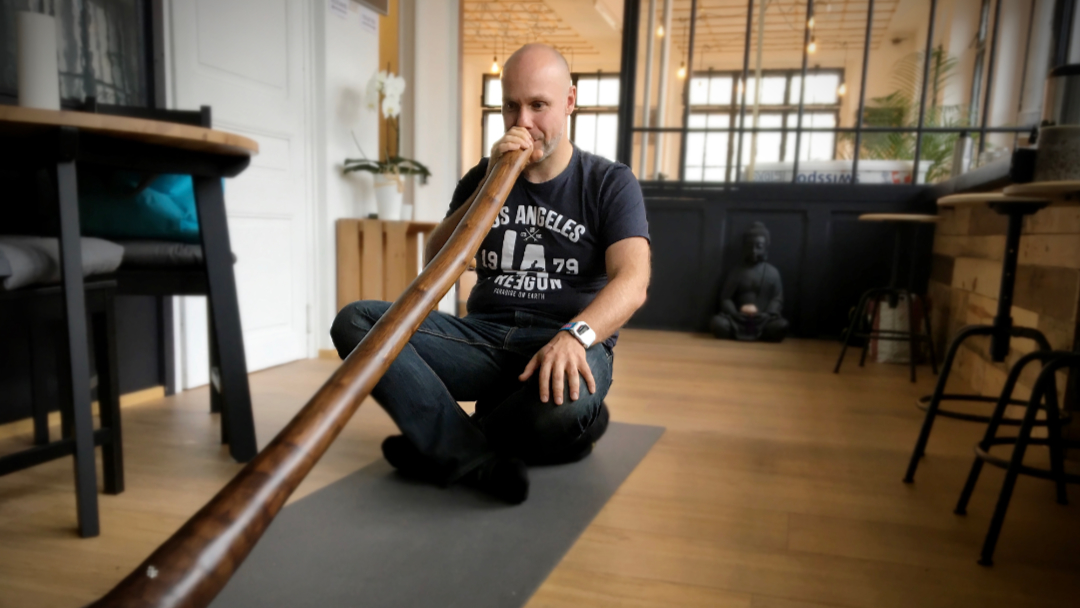
Circular breathing
It is time to unveil the obscure mechanisms.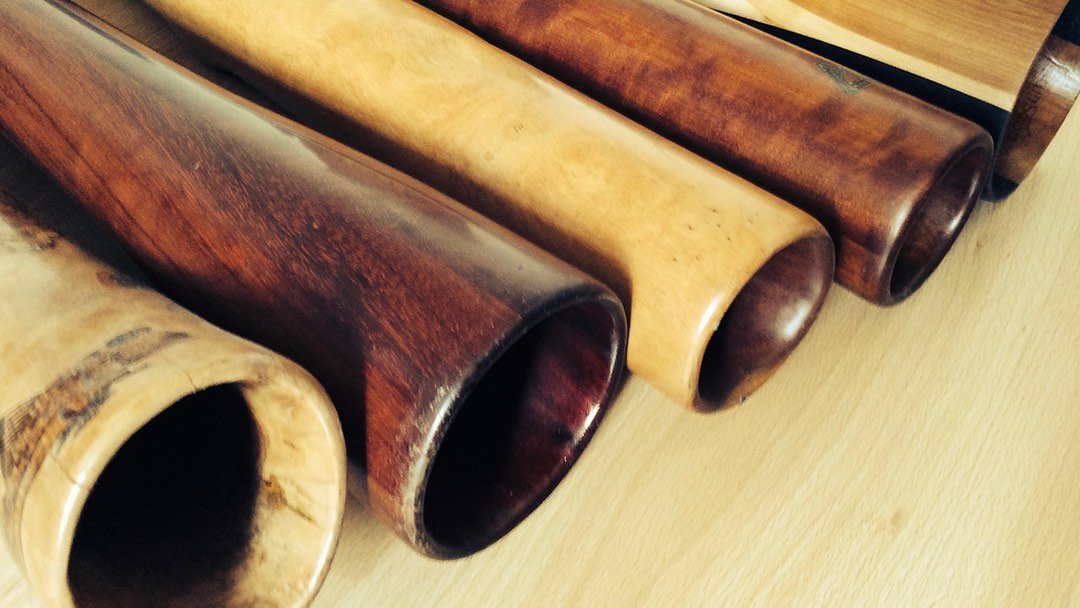
Which note should you choose?
Three big families of notes, each with its own character.
Good luck!
So much for my advice, I hope you will find it useful!