


Skip to content

3 techniques to develop your didgeridoo melodies!

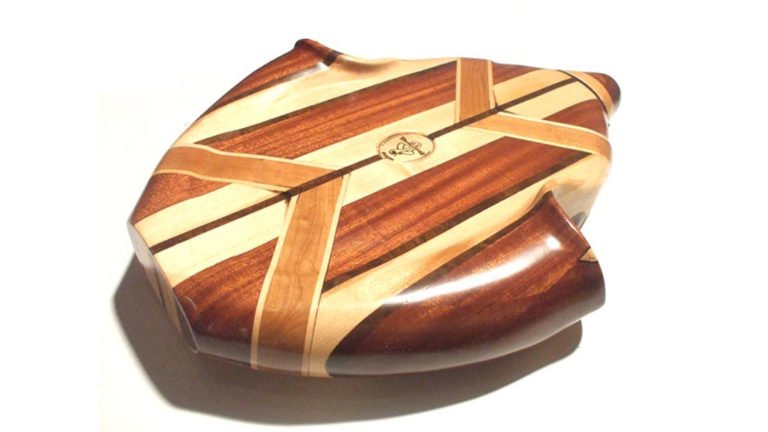
A didgeridoo bell

Melodies can be played on a didgeridoo. I will prove this in this article where will I go through three techniques to develop your own!

I have been questioning and researching the question of playing melodies for several years. Other players also have gone through it of course, but for the moment it must be admitted that the didgeridoo has not yet really revealed its full melodic potential. That being said, a few leads are very promising! Among these, three main ones stand out. These three melodic paths can, in the long run, give the didgeridoo a finer and more refined musical meaning. Let’s look at these three techniques, and why they have the potential to simply revolutionize the approach to contemporary didgeridoo in the years to come.

NB: If you are a beginner and aren’t very familiar with the terms used, I suggest you to have a look at this video in which ( I go through presenting the didgeridoo.)

Lip tension on the didgeridoo: the melody of the basses

A didgeridoo is designed to play a single note but pinching more or less the lips will modify the instrument’s note. Nothing prevents us from playing around the root note (see this video on the drone). This is called under-vibration and over-vibration.

The drop jaw on the didgeridoo

When playing, if you open your lips, you lower the didgeridoo’s note: it’s called under-vibration. By pushing this technique to the extreme, one can even reach the octave below the didgeridoo’s initial note! This is what William Thoren, an American player, developed and called “Multi-drone”. This technique then gives access to all the notes between the base drone and its octave. Unimaginable until a few years ago! But beware, here control is required. And the slightest mistake in positioning is unforgiving. So it takes a lot of precision work and practice, but it’s still one of the possibilities to develop a melody in didgeridoo playing. I suggest we name it the melody of the basses.

William Thoren explaining his innovative multi-drone technique.

The overtones on the didgeridoo

If the player can release the lips, he can also squeeze them, he will then play in over-vibration. This technique also provides a melodic approach, but unless you have a didgeridoo designed for this technique, the difference in over-vibration frankly limits the composition. Dan Flynn (another American!… The Americans have innovated quite a bit in recent years in didgeridoo) has developed this over-vibration technique. In short, it’s the same idea as William Thoren but reversed: where William was seeking to go below the note, Dan plays above it. Even if I admire the precision and rigor of his approach, the issue is that it requires a didgeridoo created solely for the purpose of being played this way. I am talking about this technique but without taking it into account because it is only accessible to players equipped with this type of instrument.

Dan Flynn playing his didgeridoo with amazing overtones!

The voice: the melody of the mediums

It is possible to sing in a didgeridoo. This is what Aborigines do every time they play. The voice adds a very particular range to the timbre of the instrument. On one hand, if the added voice is tuned with the didgeridoo then a harmonious sound emerges. On the other hand, if the note is dissonant, the sound “scrapes” (which is also very good, it’s just a different effect). Thus, the musical fifth sounds in perfect harmony with the drone. For example, if you play a C by singing a G in your didgeridoo, you will hear the two sounds blend in harmoniously (you can use a piano to find the G).

In my opinion, THE player who really developed the melody by voice is Denra Dürr (Swiss German). Unfortunately, he stopped playing before the Internet developed and it is difficult to find information about him nor his playing. At the time, a lot of players said, “That’s what he does, it’s not technical, but it sounds good. ». In reality, the voice techniques he developed are still not played today by others. Denra Dürr was several years ahead of everyone, still may very well be!

For this technique, the ideal would be to learn to sing… Before that, you can train by singing simple songs and start feeling your voice with your didgeridoo. If you want to have a great amplitude, sing in the mediums, i.e. with your natural voice (don’t go into the high pitches or too much into the low notes). Have fun scraping your voice or harmonizing it with your drone. One could say that the voice in the didgeridoo is the melody of the mediums (in reality, it is more complex than that, because you can also sing in the high notes, but it requires more practice. I simplify to keep this article rather simple!).

Denra Dürr playing “the dance of the gnomes” in his superb album Lezard Mystery

Harmonics: the melody of the high frequencies

Aaah my friends the harmonics! They are rarely developed, as they require hours of work for very slow progress. And yet they also allow us to develop full melodies in our didgeridoo playing. Each harmonic is defined by a note with which the player can compose. I started to develop this idea in my album Renaissance. For the occasion, I put the first track of the album online. Listen to the harmonic melody that is set in the introduction. You should hear it easily.

The track “À l’autre bout du monde” from my second album Renaissance.

Finally, to fully understand the potential of harmonics in didgeridoo, all you have to do is listen to the diphonic singers. They are proof that we have no excuse not to create beautiful melodies!

A melody sung through diphonic singing.

In conclusion: A melody yes, but with precision

While it is still possible to create rhythms after a few hours of didgeridoo, creating a melody is more demanding. Indeed, the common point of these three techniques is the high degree of precision they require. This is certainly the reason why the balance between rhythm and melody has not yet been achieved. But let’s face it: the didgeridoo is a melodical instrument! Take a moment to realize all potential that remains, just waiting to be discovered… If you, didgeridoo players, start looking around, then the next few years still have many surprises in store for us! So my friends, let’s go for the melody!

And if you liked this article, share it without hesitation, it’s the best way to say thank you. I assure you that it is greatly appreciated!?


Free course

Speed up your phrasing with wobbles

Increasing your speed means learning to let go. When you do, you give your didgeridoo its rightful place, and all that’s left is to listen to it.

  • 8 videos
  • For you if you are going round in circles with your habits

5/5225 Google reviews

9911members

Read next

10 responses to “3 techniques to develop your didgeridoo melodies!”

  1. Lise Lebas Avatar
    Lise Lebas

    Hi Gauthier, rainy Sunday in Corrèze, perfect weather for working on my didge! Thanks for this article, you’ve once again helped me discover another aspect of this unlikely yet fantastic instrument.

    Automatically translated from French · See the original

    Salut Gauthier, dimanche pluvieux en Corrèze, temps idéal pour travailler mon didj ! Merci pour cet article, tu m’as, une fois de plus, permis de découvrir un aspect supplémentaire de cet improbable et cependant fantastique instrument.

    1. Gauthier Aubé Avatar
      Gauthier Aubé

      With pleasure, Lise! I see you’re in Corrèze, I’m not sure if you’ve seen the workshop that will take place in La Coquille, it might not be far from you. Of course, do as you feel, I’m just passing along the info! 🙂

      Automatically translated from French · See the original

      Avec plaisir Lise ! Je vois que tu es en Corrèze, je ne sais pas si tu as vu le stage qui aura lieu à La Coquille, ça n’est peut-être pas loin de chez toi.
      Tu fais bien évidemment comme tu le sens, je te transmets juste l’info ! 🙂

  2. thierry.faivre1 Avatar
    thierry.faivre1

    Hi Gauthier, thanks for your articles—each one is just as fascinating and instructive as the last. Beginner question: in his video William Thoren lists the fundamental key of his didge as E, but he gets a B from it. Since the didgeridoo can only produce a single note, how can we say the instrument is in E rather than B? Thanks. Thierry

    Automatically translated from French · See the original

    Bonjour Gauthier, merci pour tes articles tous aussi passionnants et instructifs les uns et les autres. Question de débutant : dans sa vidéo William Thoren classe la tonalité fondamentale de son didg en Mi (E) mais obtient de lui un Si (B). Le didgeridoo ne pouvant produire qu’une seule note, comment donc admettre que l’instrument soit un Mi plutôt qu’un Si ? Merci. Thierry

    1. Hi Thierry,
      Great observation! In fact, William developed a playing technique that allows you to reach notes below the basic note (the drone) of the didgeridoo. By relaxing the lips, what we call a drop-jaw, he makes the instrument resonate lower than expected.
      Even though you can’t get a sound as rich in harmonics as the drone, it’s still a very interesting technique to explore. However, I would recommend it as a second step, once you have the fundamentals down.
      And thanks for your feedback about Wakademy!

      Automatically translated from French · See the original

      Bonjour Thierry,
      Bonne remarque ! En fait, William a développé une technique de jeu qui permet d’aller chercher des notes sous la note de base (le bourdon) du didgeridoo. En détendant les lèvres, ce que l’on appelle une sous-vibration, il fait résonner l’instrument plus bas que prévu.
      Même si on ne peut pas avoir un son si riche en harmonique que le bourdon, ça reste une technique très intéressante à explorer. Je la conseillerais cependant dans un second temps, une fois les bases bien acquises.
      Et merci pour ton retour à propos de Wakademy !

  3. Alexandre BERNARD Avatar
    Alexandre BERNARD

    Hi Gauthier,

    Do you often play without a didgeridoo?
    Is it possible to make harmonics that way, without an instrument or vocals?

    Have a great day,

    Alexandre

    Automatically translated from French · See the original

    Salut Gauthier,

    Est-ce que ça t’arrive souvent de jouer sans Didgeridoo ?
    Est-ce possible de faire des harmoniques ainsi, sans instrument ni chant ?

    Belle journée,

    Alexandre

    1. Hi Alexandre,
      Yep, that happens to me all the time, especially while driving. It lets me work on my technique when I don’t have time to practice my didge. It’s really great for progress. 🙂
      That said, you won’t get harmonics, you’ll hear the vowels but they won’t sound like harmonics.
      I can only encourage you to play without a didgeridoo, as I explain in this video:
      https://gauthieraube.com/video-exercice-progresser-didgeridoo/

      Automatically translated from French · See the original

      Salut Alexandre,
      Oui ça m’arrive très régulièrement, au volant notamment. Ça me permet de bosser quand je n’ai pas le temps de pratiquer mon didge. C’est vraiment excellent pour progresser. 🙂
      Par contre, tu n’auras pas d’harmoniques, tu entendras les voyelles mais elle ne sonneront ps comme des harmoniques.
      Je ne peux que t’encourager à jouer sans didgeridoo, comme je l’explique dans cette vidéo :
      https://gauthieraube.com/video-exercice-progresser-didgeridoo/

  4. François Avatar
    François

    I’m struggling to understand the harmonic melody, I hear it very clearly in the “whistling” of the diphonic singing, but in the introduction of your sound I’m having trouble grasping what I should be hearing as the harmonic melody. Could you shed some light on this for me? 🙂

    Automatically translated from French · See the original

    J’ai du mal à comprendre la mélodie harmonique, je l’entends très bien dans le “sifflement” du chant diphonique, mais dans l’introduction de ton son j’ai du mal à saisir ce que je dois entendre comme étant la mélodie harmonique. Pourrais-tu éclairer ma lanterne ? 🙂

    1. Hi François,
      If you listen from around 21 seconds, that’s where the melody kicks in. It doesn’t stand out like in overtone singing because with the didgeridoo, we have way more frequencies that encompass the harmonics.
      Do you hear the melody being played?

      Automatically translated from French · See the original

      Salut François,
      Si tu écoutes à partir de 21 secondes environs il y a la mélodie qui s’installe. Elle ne ressort pas comme dans le chant diphonique car nous avons, avec le didgeridoo, beaucoup plus de fréquences qui englobent les harmoniques.
      Est-ce que tu entends la mélodie qui est jouée ?

  5. Oboreal Avatar
    Oboreal

    For all fans of melody in the didgeridoo! 😉

    http://www.smeykal.com/73/en/singing-didgeridoo/

    Automatically translated from French · See the original

    Pour tous les amateurs de melodie dans le didgeridoo ! 😉

    http://www.smeykal.com/73/en/singing-didgeridoo/

    1. Thank you Oboréal, that will benefit everyone here. 🙂

      Automatically translated from French · See the original

      Merci Oboréal, ça profitera à tous le monde ici. 🙂

Leave a Reply