


Skip to content

Discovering the Dreamtime of Aboriginal Australians (2/10)

This episode is in French. My podcast is only available in French for now.

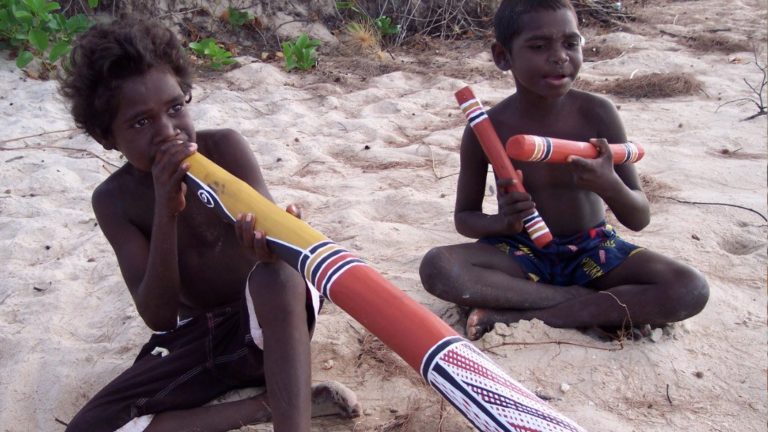
We continue our adventure among Aboriginal Australians with Greg from Didgeridoo-passion. In this second episode (in French), we tackle the vast subject of the Dreamtime. You’ll be surprised to see how this mythology finds its way into the daily life of Aboriginal people, and how, despite hard times, it’s still present and relevant in a reality so different from ours.
Enjoy the episode!

Subscribe and stay up to date with the next episodes!

Apple Podcasts (iPhone)

Podcast resources

Book | The Songlines

• The Songlines by Bruce Chatwin

Book summary and about the author
“I know this will probably sound far-fetched,” I said to Elisabeth Vrba, “but if someone asked me: ‘What’s a big brain for?’, I’d be tempted to answer: ‘For finding your way by singing in the desert…’”
She said with a smile: “I too believe hominids were nomads.” –
The Songlines – Bruce Chatwin.

A new nomad, Bruce Chatwin set off on the hunt. On the tracks of Australia (but also with Konrad Lorenz or among the Babylonians), he sniffs out and tracks down the human condition: forgotten, lost, the one that was there at the origin…
“All things considered, there are only two kinds of men in the world: those that stay at home and those that do not” (R. Kipling). And as J.-G. Hamann says: “When my feet are at rest, my mind stops working too.”

Another author: Barbara Glowczewski

I haven’t read these two books by Barbara Glowczewski (in French), but the author is an authority in the field:
• Du rêve à la loi chez les Aborigènes: mythes, rites et organisation sociale en Australie, Paris, éd. PUF, 1991.
• Les rêveurs du désert: peuple Warlpiri d’Australie, Arles, éd. Actes Sud, 1996.
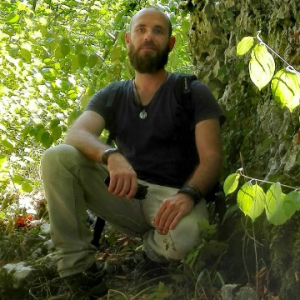
photo of Grégory Zwingelstein
About the author | Grégory Zwingelstein

Hi everyone! I’m Grégory Zwingelstein, the manager of Didgeridoo Passion. I’m happy to share my story and my experiences with the Aboriginal people of Arnhem Land, and to discover Didgeridoo Passion, click here!
Happy blowing, everyone!
Free course

Circular breathing in just a few days

Explanations that are clear, practical (!) and progressive. You’ll be surprised to see it’s simpler than it looks!

  • 7 videos in 4 steps

5/5246 Google reviews

10021members

Read next

9 responses to “Discovering the Dreamtime of Aboriginal Australians (2/10)”

  1. An experience that gives you chills too.
    At the Rainbow Serpent festival (the music festival, not an Aboriginal ceremony), several Aboriginal communities from the surrounding territories were present to authorize the festival and perform the opening ceremony on “Massacre Day” also called “national holiday”.

    During the ceremony, an Aboriginal woman asked the crowd to repeat words in her dialect meaning “the voices of all peoples”. At that moment, a rainbow appeared.
    As you say, coincidence or not, everyone will see what they want in it.

    Here’s the pleasant part.
    The other part… It’s seeing and hearing the sadness of these same people who welcome us on their lands when they see the public’s lack of respect for this land during the festival…

    I think it’s very representative. The organizers ask them to be present and share their culture, it’s a stamp of legitimacy. But too little is done to make people care (for themselves, for others, for life, for the land).
    Unfortunately, Aboriginal people are paid very little for their presence and performances compared to musicians, but they need these resources and accept with bitterness.

    Ps: An experience, a point of view.

    Automatically translated from French · See the original

    Une expérience qui donne aussi des frissons.
    Lors du festival du serpent arc-en-ciel (le festival de musique, pas une cérémonie aborigène), plusieurs communautés aborigènes des territoires alentours étaient présentes pour autoriser le festival et faire la cérémonie d’ouverture le “jour du massacre” appelé aussi “fête nationale”.

    Pendant la cérémonie, une aborigène à demandée à la foule de répéter des mots dans son dialecte signifiant “les voix de tous les peuples”. À ce moment, un arc-en-ciel est apparu.
    Comme tu le dis, coïncidence ou non, chacun y verra ce qu’il veut.

    Voici pour la partie agréable.
    L’autre partie… C’est de voir et d’entendre la tristesse de ces mêmes personnes qui nous accueillent sur leurs terres lorsqu’ils voient le manque de respect du public au cours du festival envers cette terre…

    C’est très représentatif je trouve. L’orga leurs demandes d’être présents et de partager leur culture, c’est une caution de légitimité. Mais trop peu est fait pour faire respecter le prendre soin (de soi, des autres, de la vie, de la terre).
    Malheureusement les aborigènes sont très peu payés pour leurs présence et leurs prestations comparé aux musiciens, mais ils ont besoin de ces ressources et acceptent avec amertume.

    Ps : Une expérience, un point de vue.

    1. Thanks for sharing your experience… What a complex situation for Aboriginal people in Australia… In the next episode, we’ll talk about the history of colonization. Tragic…

      Automatically translated from French · See the original

      Merci pour ton partage d’expérience… Quelle complexité la situation des Aborigènes d’Australie… Dans le prochain épisode, nous parlerons de l’histoire de la colonisation. Tragique…

  2. olivier lebrun Avatar
    olivier lebrun

    Thank you for sharing. I really enjoyed the part about how death is approached, because it shows how we live. As for me, I would like humusation to be possible in France. Are you familiar with it? By the way, I’d be interested in photos of urns if there are any.

    Automatically translated from French · See the original

    Merci pour le partage. j’ai bien aimé le passage où il est question de comment est abordé la mort car elle témoigne de comment on vit. j’aimerais pour ma part que soit possible en france l’humusation. vous connaissez? au fait, je serai intéressé pour des photos des urnes s’il y en a.

    1. I’ll ask Greg about the photo of the urns. I’m not sure if he has one. I’ll put it on the podcast page.

      Automatically translated from French · See the original

      Je vais demander à Greg pour la photo des urnes. Je ne sais pas si il en a. Je l’a mettrais sur la page du podcast.

    2. Hi Olivier,
      So I asked Greg and here’s his answer:
      Lorrkon or literally translated funeral poles, or ceremonial coffin. They are part of the final ceremony in an order of funeral rituals undertaken by the people of Arnhem Land. This ceremony involves the placement of the deceased person’s bones in a hollow funeral pole, decorated with clan paintings. According to the ceremonial, the log is placed in the ground where it decomposes slowly over the years. Today, the lorrkkon ceremony is rarely performed but similar logs are painted as decorative objects.

      https://www.didgeridoo-passion.com/fr/joe-watson
      https://www.didgeridoo-passion.com/fr/rosina-gunjarrwanga
      https://www.didgeridoo-passion.com/fr/desmond-pascoe

      Automatically translated from French · See the original

      Salut Olivier,
      J’ai donc demandé à Greg et voilà sa réponse :
      Lorrkon ou littéralement traduit poteaux funéraires, ou cercueil de cérémonie. Ils font partie de la cérémonie finale dans un ordre de rituels funéraire entrepris par le peuple de la Terre d’Arnhem. Cette cérémonie implique le placement des os de la personne décédée dans un poteau funéraire creux, décoré des peintures du clan. Selon le cérémonial, le rondin est mis en terre où il s’y décompose lentement au fil des années. Aujourd’hui, la cérémonie lorrkkon est rarement exécutée mais les rondins semblables sont peints comme objet de décoration.

      https://www.didgeridoo-passion.com/fr/joe-watson
      https://www.didgeridoo-passion.com/fr/rosina-gunjarrwanga
      https://www.didgeridoo-passion.com/fr/desmond-pascoe

  3. Othello Ravez Avatar
    Othello Ravez

    Thank you for this episode. I’m confirming here Greg’s testimony, having experienced the same thing during a full ceremony: Djalu throwing his spear when he’s angry because of some people’s lack of commitment or a rhythm mistake….. In an instant the community stops and refocuses, the atmosphere becomes heavy, then everything returns to normal or even becomes more intense in the dances. Personal testimony from my very very brief time with Djalu.

    Automatically translated from French · See the original

    Merci à vous pour cet épisode.
    Je confirme ici le témoignage de Greg, pour avoir vécu la même chose en pleine cérémonie c’est à dire : le jet de la lance de Djalu quand il est furieux à cause du manque d’engagement de certain ou d’une faute de clave ….. En un instant la communauté s’arrête se recentre, l’atmosphère est lourde, puis tout redevient normal ou même plus intense dans les danses. Témoignage perso de mon très très cours passage chez Djalu.

  4. Elisabeth Blanc Avatar
    Elisabeth Blanc

    Well done to both of you, a very interesting episode. 🙂 🙂 🙂

    Automatically translated from French · See the original

    Bravo tous les deux, un épisode très intéressant. 🙂 🙂 🙂

  5. Karl Esprit Nomade Avatar
    Karl Esprit Nomade

    Thank you both for this new episode guys. Super interesting!!! Can’t wait for the next one!!

    Automatically translated from French · See the original

    Merci à vous deux pour ce nouvel épisode les gars.
    Super intéressant !!! Vivement la suite !!

  6. Martial Avatar
    Martial

    Excellent! Thank you both!

    Automatically translated from French · See the original

    Excellent! Merci à vous deux!

Leave a Reply