


Skip to content

The dark history of Australian colonization (3/10)

This episode is in French. My podcast is only available in French for now.

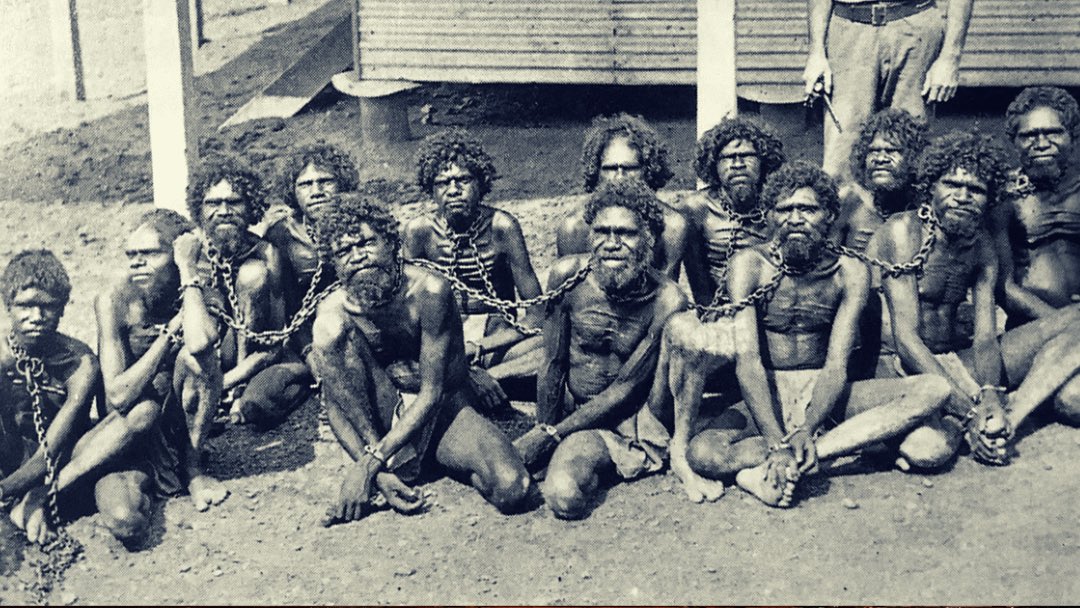
The colonization of Australia came late, and the first settlers landed in Australia in 1788. Declared “Terra nullius” by them from the very start, Australia was then seen as virgin land to be colonized, simply ignoring the presence of Aboriginal people, who were only legally recognized as human beings in 1967! From the Stolen Generations to the Australian Prime Minister’s apology, here is a short summary of the sad history of Australian colonization.

Subscribe and stay tuned for the next episodes!

Apple Podcast (iPhone)

Podcast resources

The film “The rabbit proof fence” (“Le chemin de la liberté” in French). I couldn’t find the film online (on VOD), let alone with French subtitles, but this trailer might make you want to track it down yourself.

Header image source

photo of Grégory Zwingelstein
About the author | Grégory Zwingelstein

Hi everyone! I’m Grégory Zwingelstein, the manager of Didgeridoo Passion. I’m happy to share my story and my experiences with the Aboriginal people of Arnhem Land and to discover didgeridoo passion, click here!
Happy blowing, everyone!

Free course

Circular breathing in just a few days

Explanations that are clear, practical (!) and progressive. You’ll be surprised to see it’s simpler than it looks!

  • 7 videos in 4 steps

5/5225 Google reviews

9978members

Read next

5 responses to “The dark history of Australian colonization (3/10)”

  1. Patrick GARBOUS Avatar
    Patrick GARBOUS

    First of all, thank you both for this third installment.
    There are many similarities with what happened with the Native Americans of North America (and South America – see the film “Mission”).
    I get the impression that the current situation of Aboriginal people is worse than that of Native Americans. But for both, it may depend on each one’s geographic location, each tribe.

    Automatically translated from French · See the original

    Tout d’abord, merci à vous deux pour ce troisième volet.
    Il y a beaucoup de similitudes avec ce qui s’est passé avec les indiens d’Amérique du Nord (et du Sud – voir le film “Mission”).
    J’ai l’impression que la situation actuelle des aborigènes est pire que celle des amérindiens. Mais, pour les uns et les autres, cela dépend peut-être de la situation géographique de chacun, de chaque tribu.

  2. Othello Ravez Avatar
    Othello Ravez

    Thank you for this 3rd installment. It’s still hard to know that such suffering existed.

    I recently watched the “Unknown Lands” show with the Worrora in Australia (https://youtu.be/l4flMAHzs5U). And I have to say I was surprised by the initiative of this Aboriginal family welcoming them. I found that nothing had changed. Aboriginal people seem to be in the same situation for so many years. The courage of this family and the message they’re trying to convey is noble. In any case, it struck me. A perfectly Aboriginal family lacking the means to help their own, yet deciding to try to change their way of living, in an “Aboriginal Australian” way, if I may use that expression.

    Anyway, thank you for the closing message of this podcast. Aboriginal people are very welcoming… It’s up to us to take a step aside to evolve our interpretation and our welcome.

    Automatically translated from French · See the original

    Merci pour ce 3e volet. C’est encore dur de savoir que de telles souffrances ont existé.

    J’ai regardé récemment l’émission “Terre Inconnue“ chez les Worrora en Australie (https://youtu.be/l4flMAHzs5U). Et j’avoue que j’ai été surpri de l’initiative de cette famille Aborigène qui les accueille. J’ai trouvé que rien n’avait changé. Les Aborigènes semblent être dans la même situation depuis tellement d’années. Le courage de cette famille et le message qu’ils essayent de faire passer est noble. En tout cas, il m’a interpellé. Une famille parfaitement Aborigène dépourvu de moyens pour aider les siens, et qui décide d’essayer de changer leur manière de vivre, à “l’aboriginaustralienne“, si je peux me permettre cette interstice.

    Enfin, merci pour le message de fin de ce podcast. Les Aborigènes sont très accueillant… À nous de faire un pas de côté pour faire évoluer notre interprétation et notre accueil.

    1. Thanks Othello for the documentary link, I’ll definitely write an article about it soon. And also for sharing your thoughts.

      Automatically translated from French · See the original

      Merci Othello pour le lien du documentaire, j’en ferais certainement un article bientôt. Et aussi pour le partage de tes réflexions.

  3. Great initiative with this podcast series. Well done to both of you!

    Automatically translated from French · See the original

    Belle initiative cette série de podcast. Bravo à vous 2 !

    1. Thank you David!

      Automatically translated from French · See the original

      Merci David !

Leave a Reply

Promo until 6 November 2026! View courses