


Skip to content

Didg to Didg : competition at the service of music ? Not that sure…

Since 2013 the Didg to Didg takes place every year. The great atmosphere is guaranteed and the benefits to the didgeridoo community are plenty. However, the competition format of the event makes for some unavoidable pitfalls…

Just like many didgeridoo players, I was in Poitiers (France) in 2016 for the third edition of the Didg to Didg. I attended out of curiosity, in order to form an opinion about an event I wasn’t necessarily keen on.
Well, I might as well go straight to the point: even if I was happy to see certain people (hello you !) those two days did not necessarily make me change my mind about it.
I wrote this article then in order to share my impressions and get yours. And even if the Didg to Didg is not exactly my cup of tea, to categorically reject it would mean to ignore the beautiful qualities it brought into the didgeridoo world.
A little summary of impressions after two days of « battles » follows.

The undeniable advantages for the didgeridoo community…

To get together and federate the didgeridoo community

On Earth, (yes, all over the planet!) the didgeridoo world remains pretty confidential. France, despite being one of the most active countries in the scene, has only 3 festivals dedicated to our beloved instrument: “Le rêve de l’Aborigène“, Nomadidge and the “Tribal Elek“.
The Didg to Didg has then come to complete the picture. Just like any other gathering of passionate people, it enables lots of players to connect, meet, and federate. The interesting thing being that the connections happen well beyond the French borders.
This year for instance, 9 nationalities were represented. And the best of all is that the number is set to rise edition after edition.
In times like these, when the world nations meet and seek one another, all we can do is honour this kind of initiative!

Didg 2 Didg : What is the principle ?

It works just like any Beat Box battle. The event begins with the qualifying rounds, where 32 players play on stage in sequences of 3 minutes each.
Towards the end of the afternoon, 16 candidates are selected for the next round that takes place the following day. This is when the « proper battles » begin…
Two players compete against each other by playing two sessions of 1.30 minutes each. The jury then votes based on a set of criteria such as originality of performance or yet stage presence. Only one player is chosen for the quarter finals and the same principle applies till the finals.

Sharing and improving didgeridoo techniques

I personally did not attend the first two Didg to Didg editions, but judging by what most « regulars » say, the level has only improved year after year.
It goes without saying then that the competition side of the event spurs real motivation to excel among players, proving that there’s undoubtedly some advantages to it. And challenge (in moderation) remains a healthy motivation in order to play the didgeridoo!
Plus, the Didg to Didg enables meeting new people and sharing, becoming the perfect cocktail in order to get better!

Mingling

In 15 years France has seen a great deal of progress when it comes to didgeridoo playing, and this is thanks to the emulation created by a certain number of factors.
In 2002, the first edition of “The Aboriginal dream” was born in Airvault. A year later, Lyon hosted the first French gathering of didgeridoo players, where players from Lyon and Dijon reunited at Lyon’s Croix-Rousse. The following years several workshops were organised and associations created.
The Didg to Didg fits into this evolution perfectly, enabling to nurture motivation around European didgeridoo playing.
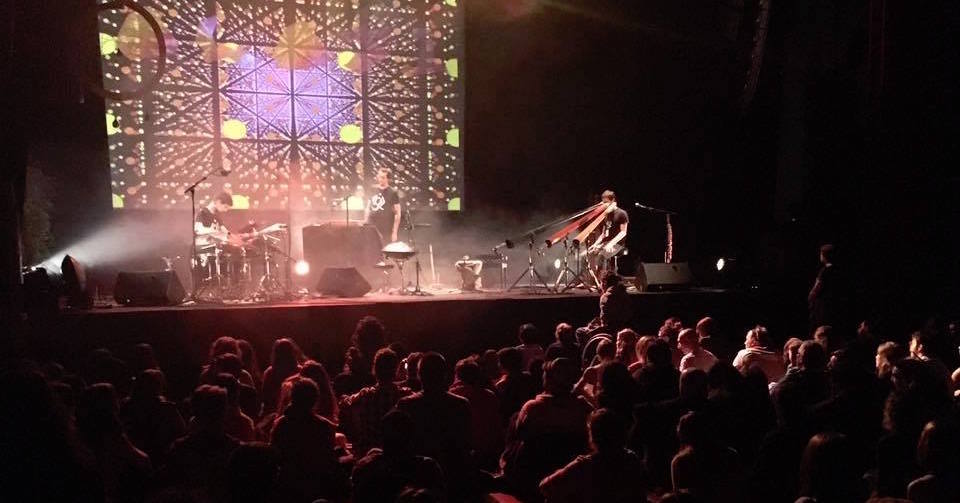
concert d'Oloji
Gigs of Oloji, thanks to Othello Ravez to invite me for a great duet !

There’s always a catch though…

A competition remains a competition

That being said, it’s not all roses and I couldn’t help but notice certain downfalls to the event. Even if the Didg to didg is extremely welcoming and friendly (with emphasis on “extremely”!) it still remains a competition. There’s subsequently a winner and rather several losers. I could see how devastated players were at being eliminated.
It’s important to notice though that the organisers do their very best in order to explain the reasons why unsuccessful players did not qualify, helping them learn from their mistakes and make progress. Despite everything, the contest still appoints a winner and quite a few losers.

Would « battles » do little for music?

If we translate battle into French we get « combat » (combat: n. a fight, struggle, or controversy, as between two persons, teams, or ideas). Just a tad heavy for music!
Words are indeed powerful and the term « combat » is far from insignificant.
And yes, let’s rest assured, battles are rather friendly, but I can’t really say I heard a lot of music played in those performances!
Skills and rhythm were there, sure, but in my opinion few players contributed much in terms of music. The didgeridoo remained merely an instrument at the service of technique.
That’s why I admired the audacity of Babu, who dared to play traditional in the semi-finals. Well done Babu, what a beautiful present!

An event for the didgeridoo passionates

Beyond the technique, the actual catch is playing for real didgeridoo passionates. Note that we’re talking about didgeridoo players playing for didgeridoo players here. This is, in my opinion the main trap.
And that is because a community, be it a didgeridoo one or that of Galapagos gray marmots, brings out great qualities such as listening, mutual help, understanding (don’t know if it’s the case for the marmots though!)
However, the thing is that members of the same group end up playing for their own community, ignoring the rest of the world. So we play just for other didgeridoo players here, forgetting the 7 billion other individuals around.
Blunt as it may sound, I still believe there’s some truth behind it all…

The final of Didg 2 Didg in 2015 in Grenoble (France). Joao Vs Tom B !

Some advice for the competitive didgeridoo players

Even if I’m not a big fan of these kinds of events, here are some titbits that might come in handy for all those who would love to try their luck at the Didg to Didg one day !

The evolution of rhythms

During the qualifying rounds and battles, we usually had 2 configurations: The player set his rhythm from the start and we knew that it was unlikely to change throughout the performance. Players started off slowly just to end up setting a rhythm and keeping the pattern till the end of the piece. In both cases, there were no surprises. So if you’re competing, go beyond this mindset and surprise your audience (and the jury!). Everybody loves a surprise. 🙂

Improving the transitions

Even if rhythms didn’t change much, from time to time transitions did happen. And they rather made you lose track of the piece, be it because the tempo was modified or because the rhythmic structure was broken. It’d be a great idea then to work on everything related to break transition and pace with our old friend the metronome. Again and again!

Whatever happened to harmonics?

According to the latest reports, they’re at Bora Bora enjoying life! Nobody wants them anyways so they’re having a well-deserved holiday. 🙂 I thought that maybe, with time, our beloved harmonics would be a little bit more valued, but speed (read breathing mastery) has largely been preferred by players. The beauty of harmonics and the precision of attacks (namely the extent to which a note is hit) are neglected. That remains coherent though with the competition format: as long as we pretend to impress with a didgeridoo, speed will always win. Poetry though is more discrete, however it creates elegance and that remarkable subtlety that certainly knows how to reach hearts. Fellow players, practice your overtones and the clarity of your sound and become poet battlers!

In conclusion: Didg 2 Didg, a friendly battle

Once more, no Didg to Didg bashing here, I’m just sharing my point of view and encouraging the exchange of ideas on the subject. Today, the didgeridoo world is heavily influenced by the spirit of beatbox and the Didg to Didg certainly meets an expectation from a number of players. This said, I’d have truly loved listening to a Stephen Kent or a Denra Durr in those battles! That would have made for a beautiful and rather audacious surprise! Still, hats off to the association « Sur 1 Air 2 didg » which did a wonderful job organising the event and to Zalem, for coming up with the idea that encourages so many players. Congratulations to Tiago Francisquinho on his solo victory as well, and to Julien Henneveux and Adrien B. Prana for their duo Underground cosmic didgs thanks to which they won the duo contest. And just want to end by saying that the main thing is that everyone live his music (and life!) with sincerity, simplicity and generosity.

If what I say resonates with you and have any comments or ideas, please share them below! That will contribute to the overall debate. And of course if you feel like it, share this article!

Free

Learn the didgeridoo for free

Full courses, free. You start right away.

Beginner level course

Master circular breathing

Learn circular breathing in 4 simple, easy-to-follow steps. You’ll be surprised at how much easier it is than it looks!

7 videos

Intermediate level course

Increase your speed

Wobbles will help you build speed like no other technique. An absolute must!

8 videos

5/5225 Google reviews

9002members

Read next

14 responses to “Didg to Didg : competition at the service of music ? Not that sure…”

  1. Nadia Avatar
    Nadia

    Hi,

    A girl’s perspective here!
    It’s true you can feel the competition (even if the vibe is good), and some people get stressed (even about signing up for the event, because we know we’re going to be judged on our playing!).

    My question is more like “what criteria are used to judge someone’s playing?”.
    A very energetic, pulsing, fast-paced playing will pass more easily than slow playing with harmonics, vocals and other stuff.
    It could be interesting to add categories or “challenges” by imposing a style, technique or even having to improvise with another instrument (percussion, guitar, flute…).
    Maybe that would show whether the didgeridoo player adapts easily and has good listening skills.

    The prize to win is stage time and not a didgeridoo (thankfully!), so the fact that there’s a “winner” who can deliver makes sense (gotta perform well on stage at Airvault!!!).

    But that’s just my girl’s opinion 😀

    Automatically translated from French · See the original

    Salut,

    Mon avis de fille!
    Il est vrai qu’on sent la compet’ (même si c’est dans la bonne ambiance), y’en a qui stress (même de s’inscrire à l’évènement, car on sait qu’on va être jugé sur notre jeu!).

    Ma question est plutôt “sur quoi on se base pour juger le jeu d’une personne?”.
    Un jeu très énergique, qui pulse, qui va vite passera plus facilement qu’un jeu lent avec harmoniques, vocalises et autres.
    ça peut être intéressant de rajouter des rubriques ou “épreuves” en imposant un style, technique ou voir même devoir improviser accompagné d’un autre instrument (percus, guitare, flûte…).
    Peut-être que ça permettrait de voir si le / la joueur(euse) de didg s’adapte facilement et est en capacité d’écoute.

    Le lot a gagné est un passage sur scène et non pas un didgeridoo (heureusement !), donc le fait qu’il y ait un “gagnant” qui tienne la route est logique (faut assurer après sur scène à Airvault !!!).

    Mais ceci n’est que mon avis de fille 😀

    1. Ah! Thanks Nadia for this feminine comment!! That’s not so common. 🙂 Your ideas are great, maybe the organizers are open to these suggestions. There was a nice spirit of openness at the last didg to didg…

      Automatically translated from French · See the original

      Ah ! Merci Nadia pour ce commentaire féminin !! Ca ne court pas les rues. 🙂
      Elles sont chouettes tes idées, peut-être que les organisateurs sont ouverts à ces propositions. Il y avait un bel esprit d’ouverture au dernier didg to didg…

  2. Vincent Avatar
    Vincent

    Hi Gauthier,

    It’s great to hear from you after all these years.

    Overall I agree with your analysis. I don’t think this event is “harmful” to traditional or modern didgeridoo, it’s more the friendly spirit that matters than winning.

    From a musical standpoint, I couldn’t make it to Didj 2 Didj, but I saw some videos that confirmed my concerns…

    First, the 1min30 format that clearly pushes for technical one-upmanship at the expense of musicality (drone variation, harmonics, vocals, sound clarity, rhythmic progression etc…).

    Then the mix of different playing styles and the lack of representation of the traditional style, which let’s not forget is the foundation of everything.

    I’ve known you for years, I’ve been able to see your evolution and that of the didgeridoo in general since I’ve been playing for 20 years (that doesn’t make me any younger…), and I think our generation that experienced this evolution can seem puzzled by this emphasis on new techniques. I often think that the simplest things can lead to the best results. It reminds me of the yidaki method of the late Milkay where he explained working on basic articulations every day with or without yidaki.

    Like you and other players, it’s the vibration, the drone that attract me, and I have the impression (maybe wrong) that something got lost at Didj 2 Didj; but far from me the idea of playing the grumpy old guy, like “it was better before and blah blah…” it’s still festive and if it can help discover and share in a good spirit, then “long live D2D!”

    Automatically translated from French · See the original

    Salut Gauthier,

    Ca fait du bien d’avoir de tes news après toutes ces années.

    Dans l’ensemble je suis d’accord avec ton analyse. Je ne pense pas que cet évènement soit “néfaste” au didj traditionnel ou moderne, c’est plus l’esprit convivial qui compte que la victoire.

    Du point de vue musical, je n’ai pas pu assister à Didj 2 Didj, mais j’ai vu des vidéos qui confirment mon appréhension…

    Tout d’abord le format d’1min30 qui pousse clairement à la surenchère technique au détriment de la musicalité (variation du bourdon, harmoniques, vocalises, clarté du son, progression rythmique etc…).

    Ensuite le mélange entre les différents styles de jeux et le manque de représentativité du style traditionnel, qui ne l’oublions pas est à la base de tout.

    Je te connais depuis des années, j’ai pu voir ton évolution comme celle du didj en général depuis 20 ans que je pratique (çà me rajeunit pas là…), et je pense que notre génération qui a connu cette évolution peut paraître déconcertée par cette mise en avant de nouvelles techniques. Je pense souvent que les choses les plus simples peuvent aboutir au meilleur résultat. Ca me rappelle la méthode de yidaki de feu Milkay où il expliquait travailler les articulations de base tous les jours avec ou sans yidaki.

    Comme pour toi et d’autres joueurs c’est la vibration, le bourdon qui m’attirent, or j’ai l’impression (peut être fausse) qu’une partie s’est perdue à Didj 2 Didj ; mais loin de moi l’idée de jouer au vieux con, genre “c’était mieux avant et gnagnagna…” ce là reste festif et si çà peut faire découvrir et partager dans un bon esprit, alors “longue vie à D2D !”

    1. Hi Vincent,
      Thanks for your thoughts on this question. I always find it fascinating to see how things evolve over time. Understanding the didgeridoo’s journey over the past few decades helps us better shed light on the present.
      And don’t worry, your comment doesn’t come across as old-fashioned at all :-). It’s great because everyone shares their perspective with so much respect, I think!

      Automatically translated from French · See the original

      Salut Vincent,
      Merci pour ton avis sur la question. Je trouve toujours fascinant de voir comment les choses évoluent avec le temps. Comprendre le parcours du didgeridoo de ces dernières décennies nous permet de mieux éclairer le présent.
      Et ne t’en fais pas, ton commentaire ne fait pas du tout “vieux con” :-). C’est chouette car chacun donne son avis avec beaucoup de respect je trouve !

  3. Well, it’s nice to read all these reviews! I can see this article gets more responses than the beeswax mouthpiece ones! 🙂
    Thanks for sharing your ideas and impressions here.
    I see there’s a lot of wisdom in all these comments. With such exchanges, there’s no doubt that the didgeridoo world should continue to do well.
    We should run into each other, mostly at Airvault, which will give us a chance to talk about it again. Or not, actually… Time will tell! 🙂
    See you soon, friends!

    Automatically translated from French · See the original

    Ah ben ça fait plaisir de lire tous ces avis ! Je vois que cet article fait plus réagir que les embouchures en cire d’abeille ! 🙂
    Merci de partager ici vos idées et impressions.
    Je vois qu’il y a beaucoup de sagesse dans tous ces commentaires. Avec de tels échanges, nul doute que le monde du didgeridoo devrait continuer à bien se porter.
    On devrait se croiser, pour la plupart à Airvault, ce qui nous donnera l’occasion d’en reparler. Ou pas d’ailleurs… Qui vivra verra ! 🙂
    A bientôt les amis !

  4. Personally, I discovered the didge and learned a lot about its possibilities thanks to the Didg to didg. I took part in the 2nd edition which I loved and I remember more the fraternal spirit than a competition… In any case, maybe I’m wrong but I think that if it were a competition with other instruments (electric guitar, piano…) it would be 100 times worse… Since the didge world isn’t very big, the players I think go there more to meet each other than for the contest which, and that’s very good, doesn’t give away “big prizes”… Personally I don’t like the “sponsored beatbox competition by Doritos and other multinational brand” craze… And here, we’re far from that, which I think is all the better!

    Now regarding the competition side, with a winner… Well it’s very “Western” as a system, and I must admit that a simple didge festival with the possibility for each didge player to do a presentation of their art, a sort of big stage, open to all didge players… would satisfy me just as much, but after that maybe it could be an idea to organize another festival in addition to this one…
    We just need to roll up our sleeves and we’re off.

    Automatically translated from French · See the original

    Personnellement, j’ai découvert le didg et appris énormément sur ses possibilités grace aux Didg to didg. J’ai participé à la 2 eme éditions que j’ai adoré et je me souviens plus de l’esprit fraternel, que d’une competition… En tous cas peut-être que je me trompe mais je pense que si cela serait une competition d’autre instrment (guitare electrique, piano…) ça serait 100 fois pire… Puisque justement le monde du didg n’etant pas tres grand, les joueurs je pense y vont plus pour se rencontrer que pour la rencontre qui, et c’est tres bien ainsi, ne donne pas de “gros lots” à gagner… Perso je n’aime pas le délire “competition beatbox sponsorise par doritos et autres marques de multinational…” Et là, on en est loin, ce qui est à mon sens t’en mieux!

    Après pour le coté competition, avec un gagnant… Bah c est très “occidental” comme systeme, et je dois avouer que un simple festival de didg avec la possibilite à chaque joueur de didg de faire une presentation de leur art, une sorte de grande scène, ouverte à tous les joueurs de didg… me satisferais tous autant, mais apres ça peut-être une idee pour organiser un autre festoche en plus de celui ci…
    Faut juste se remonter les manches et c’est parti.

  5. Great analysis Gauthier and I agree with you on many points. I think this event is above all a show.
    I have to say the jury showed real openness in my case, and the nod to the instrument’s origins was supported by them too when they gave me a spot in the top 16, and that made me happy. There were certainly plenty of other players who deserved to make it through the qualifiers.
    The competitive spirit is indeed very present and you can feel that some players had prepared very seriously and use strategies. It’s undoubtedly very formative for those aiming to perform on stage and boost their playing.
    The time limit does encourage doing fireworks rather than a composed piece, I agree.
    In any case, I’m glad I participated at least once.

    Automatically translated from French · See the original

    Belle analyse Gauthier et je te rejoins sur bon nombre de points. Je pense que cet événement est avant tout un show.
    Je dois dire que le jury a fait preuve d’un bel esprit d’ouverture en ce qui me concerne et le clin d’oeil aux origines de l’instrument c’est aussi eux qui l’ont supporté en m’accordant une place dans les 16 et ça m’a fait plaisir. Il y avait bien sûr beaucoup d’autres joueurs qui méritaient de passer les qualifs.
    L’esprit compétition est en effet bien présent et on sent que certains joueurs s’étaient préparés très sérieusement et usent de stratégies. C’est sans aucun doute très formateur pour ceux qui visent à faire de la scène et booster leur jeu.
    Le chrono incite je suis d’accord à faire un feu d’artifice plutôt qu’une composition posée.
    En tout cas je suis heureux d’y avoir participé au moins une fois.

  6. After discussing with several people, the same feeling emerges…
    From my point of view, when you participate in a competition you know what to expect, so on that side, no complaints.
    But what seems important to me to highlight is the evolution of the didgeridoo, or at least, the different playing styles… Traditional, Western, and its evolution, beatbox…
    I let myself be mesmerized by the sound of the didgeridoo, however it’s played.
    I was moved by the point of view of several people who were wondering about opening different categories…

    Automatically translated from French · See the original

    Après avoir discuté avec plusieurs personnes c’est le même ressenti qui se dégage…
    De mon point de vue, quand on participe à une compétition on sait à quoi s’en tenir, donc de ce côté-là, rien à redire.
    Mais ce qu’il me semble important de mettre en relief, c’est l’évolution du didgeridoo, ou du moins, les différents styles de jeu… Trad, occidental, et son évolution, le beatbox…
    Je me laisse envoûté par le son du didgeridoo, qu’il soit jouer de n’importe quelle façon.
    J’ai été touché par le point de vue de plusieurs personnes qui se posaient la question d’ouvrir différentes catégories…

  7. Julien HDV Avatar
    Julien HDV

    Hey Gauthier!

    I really enjoyed your article, it’s my favorite one on your blog so far 🙂
    The event description is accurate, your observations too (technique at the expense of music sometimes, risk of having a community turned inward on itself) and your suggestions are very good as well (harmonics, transitions and composition).

    As for the battle notion, I think D2D stays pretty soft on it if we compare it to big beatbox battles like national or world championships or “Seven to smoke” for example; juries have had grids for several years now to help them, with criteria for technique, musicality, stage presence AND battle spirit.
    We really expect from participants a certain aggressiveness, the goal being clearly to transcend themselves for the artists, it’s a pretext to go beyond what we do best alone and it’s something very explicit in the beatbox community, which like the didge one is very “family” but in which we readily admit that the battle spirit we find on stage only makes sense ON stage.
    I can’t help but also make a link with what the instrument represents for its practitioners, let me explain:
    A large part of the didge community sees in the instrument something like joy, or meditation, a connection to nature, and even healing (I don’t know anyone who heals people with a trumpet or a piano, at least not in the form of “vibrational massages”), and I completely understand that the notion of “battle” might grate or seem out of place.
    For others like me it’s a musical instrument with a very particular history of course, but a musical instrument, period; didgeridoo battles I see them neither more nor less as opportunities to improve ourselves, by overcoming stage fright, fear of ourselves and fear of the other.
    It’s a good school for learning to proclaim loud and clear what we love in the didge, no room for hesitation, doubt: it pushes you to assert your playing with strength.

    D2D at its core, is of course a desire to bring together/unite a community that sees itself far too little, to exchange techniques, but beyond that I have the feeling that a good part of the participants comes for the instrument itself, to evolve the instrument and its possibilities, at least that’s my feeling and I see an allegory of life in it where we don’t survive without fighting, without showing strength; we don’t crush anyone when we win a round and I’ve never felt humiliated or sad about losing; it’s a modern joust whose goal is to come out better for both sides 🙂

    PS: I played for a year on Bora Bora so I can confirm to you that the harmonics aren’t there anymore :p

    Automatically translated from French · See the original

    Salut Gauthier!

    j’ai beaucoup aimé ton article, mon préféré sur ton blog jusqu’à maintenant 🙂
    La description de l’événement est fidèle, les constats également (technique au détriment de la musique parfois, risque d’avoir une communauté tournée vers elle-même) et tes suggestions sont très bonnes aussi (harmoniques, transitions et composition).

    Pou ce qui est de la notion de battle je trouve que D2D reste très soft là-dessus si on compare avec les grosses battles de beatbox comme les championnats nationaux, mondiaux ou le “Seven to smoke” par exemple; déjà les jury ont depuis plusieurs années des grilles pour les aider, avec les critères de technique, musicalité, présence scénique ET esprit battle.
    On attend vraiment de la part des participant une certaine agressivité, le but étant clairement de se transcender pour les artistes, c’est un prétexte pour aller au delà de ce que l’on fait de mieux seul et c’est quelque chose de très explicite dans la communauté du beatbox, qui comme celle du didge est très “famille” mais dans laquelle on admet sans problème que l’esprit battle que l’on trouve sur scène n’a de sens QUE sur scène.
    Je ne peux pas m’empêcher aussi de faire un lien avec ce que l’instrument représente pour ses praticiens, je m’explique:
    Une grande partie de la communauté didge voit en l’instrument quelque chose de l’ordre de la joie, ou de la méditation, du rapport à la nature, et même du soin (je connais personne qui soigne les gens avec une trompette ou un piano, du moins pas sous la forme des”massages vibratoires”), et je comprend complètement que la notion de “battle” puisse grincer ou sembler décalé.
    Pour d’autres comme moi il s’agit d’un instrument de musique avec une histoire toute particulière bien sur, mais un instrument de musique, point; les battle de didgeridoo je les vois ni plus ni moins comme des opportunités pour s’améliorer les uns les autres, en dépassant la peur de la scène, la peur de soi et celle de l’autre.
    C’est une bonne école pour apprendre à clamer haut et fort ce que l’on aime dans le didge, pas de place pour l’hésitation, le doute: ça pousse à affirmer avec force son jeu.

    D2D dans le fond, c’est bien sur une volonté de réunir/fédérer une communauté qui ne se voit que trop peu, d’échanger des techniques, mais au-delà j’ai le sentiment qu’une bonne partie des participants vient pour l’instrument lui-même, pour faire évoluer l’instrument et ses possibilités, du moins c’est mon sentiment et j’y voit une allégorie de la vie dans laquelle on ne survie pas sans se battre, sans faire preuve de force; on écrase personne lorsqu’on gagne une manche et je ne me suis jamais senti humilié ou triste de perdre; c’est une joute moderne dont le but est de ressortir meilleur pou les deux parties 🙂

    PS: j’ai joué un an sur Bora Bora donc je te confirme que les harmoniques n’y sont plus :p

  8. Colas Avatar
    Colas

    Gauthier Aubé: provocative titles to attract audiences? Not so sure…

    😀

    Joking aside, I pretty much agree with your analysis: I had a similar one when I discovered the event last year. But participating this year made me see it from another angle, in my opinion not perceivable by the public.

    You talk about disappointment, winning, losing… all that we gain or lose is the “right” to send a few more vibrations in the next round, the right to keep participating in the party on the stage side. It doesn’t say who is better or worse. There’s naturally a bit of disappointment when you “lose” because the game ends there, but honestly apart from Tiago we all lost if you think about it 😉 And Tiago “won” a little piece of space-time to make us vibrate at the Dream!

    Then regarding musicality I understand your disappointment… I perceive you as someone who seeks the absolute, you would have liked this event to be representative of everything we can do on the didgeridoo. But it’s just not possible. Already because of the 1min30 format. It doesn’t seem like much before you play but it’s a huge constraint. Personally I’m more of a fan of the didg that takes you on a journey than the one that gets people jumping (maybe because I’m the last one to jump…) And there it was very clearly the “get people jumping” aspect of the music that was highlighted, rewarded anyway, even if this year the public was sitting 😀

    So yes it’s a very particular aspect of the didg that’s being presented, you shouldn’t see it as something absolute, the didg in its entirety, I don’t think that’ll ever be the direction. Because laying down a real sonic journey in 1min30, I’m not saying it’s not possible, but it doesn’t get me stoked, not as much anyway as sending pure groove for 1min30.

    Where I’m 1000000% with you is that even to send some heavy meat, you need finesse in the sound. Big pig percussion without a beautiful rich drone, that doesn’t make me vibrate either. But there’s room for improvement on that front and that’s a good thing.

    Also gotta say that even if we had nice sound on the didgs, playing amplified when you’re not used to it totally changes the game. I’d tested this little Alex Didg acoustically before the battles, at the first match I pick it up and plugged into those big speakers impossible to achieve the harmonic finesse that comes out so naturally from this kind of stick. So we tend to shift our playing downward, toward more belly, toward big pulsation.

    “as long as people try to impress with a didgeridoo speed will win out. Poetry, on the other hand, is more discreet”

    10⁷ % agree and I understand that it’s not your cup of tea! There’s a time for everything and gotta say we like to act like cavemen 😀 Still that, yeah huh harmonics never killed anyone 😉 But poetry has its place in other contexts, it’s like punk, it’s not dead!

    So you coming to play next year?

    Automatically translated from French · See the original

    Gauthier Aubé : des titres provocateurs pour attirer l’audimat ? Pas si sûr…

    😀

    Taquineries mises à part je suis assez d’accord avec ton analyse : j’avais un peu la même en découvrant l’événement l’année dernière. Mais participer cette année ça m’a fait voir le truc sous un autre angle, à mon avis non perceptible par le public.

    Tu parles de déception, de gagner, de perdre… tout ce qu’on gagne ou perd, c’est le “droit” d’envoyer encore quelques vibrations au tour d’après, celui de continuer à participer à la fête côté scène. Ça désigne pas qui est meilleur ou moins bon. Forcément un peu de déception quand on “perd” car la partie s’arrête là, mais bon à part Tiago on a tous perdu si on va par là 😉 Et Tiago a “gagné” un petit bout d’espace-temps pour nous faire vibrer au Rêve !

    Ensuite concernant la musicalité je comprends ta déception… je te perçois comme quelqu’un qui cherche l’absolu, t’aurais aimé que cet événement soit représentatif de tout ce qu’on peut faire au didgeridoo. Mais c’est juste pas possible. Déjà à cause du format d’1min30. Ça paraît pas avant de jouer mais c’est énorme comme contrainte. Personnellement je suis plus amateur du didg qui fait voyager que de celui qui fait sauter le public (peut-être parce que je suis le dernier à sauter…) Et là c’était très clairement l’aspect “faire sauter les gens” de la musique qui était mis en avant, récompensé en tout cas, même si cette année le public était assis 😀

    Donc oui c’est un aspect très particulier du didg qui est présenté, faut pas voir le truc comme quelque chose d’absolu, le didg dans sa totalité, je pense que ce sera jamais la direction. Parce que poser un vrai voyage sonore en 1min30, je dis pas que c’est pas possible, mais ça me fait pas triper, moins en tout cas que d’envoyer du groove pur pendant 1min30.

    Là où je te rejoins à 1000000% c’est que même pour envoyer du gros steak, il faut de la finesse dans le son. Des grosses percus de cochon sans un beau bourdon bien riche, ça me fait pas vibrer non plus. Mais y a de la marge de progression de ce côté et c’est tant mieux.

    Faut dire aussi que même si on a eu un beau son sur les didgs, jouer amplifié quand on en a pas l’habitude ça change totalement la donne. J’avais testé ce petit Alex Didg en acoustique avant les battles, au premier match je le prends et branché sur ces grosses enceintes impossible d’atteindre la finesse d’harmonique qui sort pourtant toute seule de ce genre de bâton. Donc on a tendance à déplacer notre jeu vers le bas, vers plus de ventre, vers de la grosse pulsation.

    “tant que l’on cherchera à impressionner avec un didgeridoo la vitesse l’emportera. La poésie, quant à elle, est plus discrète”

    10⁷ % d’accord et je comprends que ça soit pas ta tasse de thé ! Y a un temps pour tout et faut dire qu’on aime bien faire les bourrins 😀 Reste que, oui hein les harmoniques n’ont jamais tué personne 😉 Mais la poésie a sa place dans d’autres contextes, c’est comme le punk, elle est pas morte !

    Allez tu viens jouer l’année prochaine ?

  9. I’m 100% in agreement with your article, you’re pointing out exactly what needs to be said. I’d like to add a few clarifications, since all the points you raised are ones I’d already thought through during the participant selection process. We can see today a very strong impact of beatbox in the didgeridoo world, to the point where it’s almost overshadowing other playing techniques. I was delighted to receive Babu’s video, because I was disappointed that we couldn’t offer this audience of didgeridoo players a traditional approach to the instrument, just as I was let down to see that Joe Caudwell couldn’t be with us to give us some harmonic playing.

    In itself, it would surely be very interesting to organize by categories (beatbox, traditional, soundscape…), but the boundaries to place between them can be very blurry.

    However, what I hope is that what we saw during these battles doesn’t reflect the entirety of players. By nature, the battle format lends itself well to the beatbox world, since it’s about, above all like any competition, a technical demonstration, and it’s hard to imagine soundscape battles.

    It’s to counterbalance this technical demonstration that we wanted to open a “duo” category this year, so that in this category, musicality, listening, and composition would be put forward, and on that front, we weren’t disappointed—it encouraged players to compose together, which gave us some really beautiful pieces.

    Automatically translated from French · See the original

    Je suis à 200% d’accord àvec ton article, tu pointes le doigt juste là où il le faut. Je voudrais apporter quelques précisions, puisque toutes les remarques que tu as soulevées, je me les suis faites, déjà lors de la sélection des participants. On peut constater aujourd’hui un très fort impact du beatbox dans l’univers du didgeridoo, à un point qu’il en vient presque à occulter les autres techniques de jeu. J’ai été ravi de recevoir la vidéo de Babu, parce que je déplorais qu’on ne puisse offrir à ce public de joueurs de didgeridoo une approche traditionnelle de cet instrument, tout comme j’ai été déçu de voir que Joe Caudwell ne pouvait pas être présent parmi nous pour nous offrir un jeu sur les harmoniques.
    En soit, il serait surement très intéressant de fonctionner par catégories (beatbox, trad, nappe….), mais les frontières à placer entre celles-ci peuvent être très floues.

    Cependant, ce que j’espère, c’est que ce que nous avons vu durant ces battles ne reflète pas l’entièreté des joueurs. Par nature, le format battle se prête bien à l’univers beatbox, puisqu’il s’agit, avant tout comme toute compétition, d’une démonstration technique, et on imagine bien moins facilement des battles de nappes.

    C’est pour contrebalancer cette démonstration technique que nous avons voulu ouvrir cette année une catégorie “duo”, pour que dans cette catégorie, la musicalité, l’écoute, et la construction soient mises en avant, et de ce côté, nous n’avons pas été déçus, ça a encouragé des joueurs à composer ensemble, ce qui nous a offert de très beaux morceaux.

  10. Monkey Didg' Avatar
    Monkey Didg’

    I agree with you when you say that beat box takes over a bit too much on the finesse of harmonics that tend to be left aside.
    As for the winner and the many losers, disappointment is obviously present for those who don’t qualify for the battles but there are no surprises! When you participate in Didg to Didg, competitors expect to be eliminated. Moreover, the jury had to make very difficult choices at each stage and sometimes voted (almost) at random.
    Obviously you have to designate a winner at the end, but for me from the quarter-finals onwards (or even the round of 16 with babu for the traditional) all the competitors were specialized in their own style and deserved a place in the finals. The idea of “battle” is certainly brutal but remains just a way to energize exchanges.

    Anyway I respect your opinion 100%, and I hope mine holds up 🙂

    See you very soon!

    Monkey Didg’ de Lyon

    Automatically translated from French · See the original

    Je suis d’accord avec toi quand tu dis que la beat box l’emporte un peu trop sur la finesse des harmoniques qui ont tendance être laissées de côté.
    Pour ce qui est du gagnant et des nombreux perdants, la déception est évidemment présente pour les non qualifiés aux battles mais il n’y a pas de surprises! Quand on participe au Didg to Didg les concurrents s’attendent à être éliminés. De plus, le jury a dû faire des choix très difficiles à chaque étape et quelques fois votaient (presque) au hasard.
    Évidemment il faut désigner un gagnant à la fin, mais pour moi dès les quarts de finale (voir les 8èmes avec babu pour le traditionnel) tous les concurrents étaient spécialisés dans leur propre style et méritaient une place en finale. L’idée de “battle” est certes brutale mais reste juste un moyen de dynamiser les échanges.

    Quoi qu’il en soit je respect ton avis à 100%, et j’espère que le mien tien la route 🙂

    A très bientôt!

    Monkey Didg’ de Lyon

  11. Hi Gauthier, thanks for putting the event into perspective in your article. I agree with you on the advantages and pitfalls… but only to a certain extent. I don’t see competition, playing games as something necessarily negative, nor losing for that matter! The general mindset and especially the personal one with which you approach a game between friends is what’s paramount. On musicality, it could definitely be highlighted much more, I agree, but I think it will increasingly be the case in the future (as is the case in the beatbox world today). In my opinion, it requires more mastery to be implemented in spontaneity and stress. It actually appeared sporadically after you left, you’ll see it in the videos.

    And yes, an event for passionate people. That will always be the bulk of the audience, I think. So be it, but once again to draw a parallel with the longer history of beatbox battles, I believe that curious onlookers can nevertheless take a lot of pleasure in following this event from a theatrical and musical angle.

    Personally, I took it as a catalyst, an opportunity to work on my musicality and technique from a different angle: that of a condensed show. It pushed me to create and shape ideas, it confronts you with the challenges of stress management, improvisation and spontaneity. And for 2 days for all participants, winners/losers, what emotions! And it was also what pushed Julien and me to compose and create Underground Cosmic Didgs.

    Didg to Didg is one of the facets of the didgeridoo, the show, the game, there are many others in other places and circumstances (ethnography, concert, meditation, therapy…). Each facet can satisfy such or such a personality trait.

    What do you think?

    Long live Didg to Didg and its current spirit.

    Automatically translated from French · See the original

    Salut Gauthier, merci pour la mise en perspective de l’évènement dans ton article. Je suis d’accord avec toi sur les avantages et sur les pièges … mais uniquement dans une certaine mesure. Je ne vois pas la compétition, le jeu comme quelque chose de nécessairement négatif, comme perdre d’ailleurs ! L’état d’esprit général et surtout personnel dans lequel on aborde un jeu entre ami y est primordial. Sur la musicalité, elle pourrait être mise bien plus en avant je suis d’accord, mais je pense que ce sera de plus en plus le cas à l’avenir (comme c’est le cas dans le monde du beatbox aujourd’hui). Selon moi, elle exige plus de maîtrise pour être mise en place dans la spontanéité et le stress. Elle est d’ailleurs apparu ponctuellement à la suite de ton départ, tu le verras sur les vidéos .
    Et oui, un évènement de passionné. Ce sera toujours je pense le gros du public. Ainsi soit il mais, encore un fois pour faire le parallèle avec la plus longue histoire des battles beatbox, je crois que les curieux et badaud peuvent néanmoins prendre beaucoup de plaisir à suivre cet évènement sous l’angle théâtral et musical.

    A titre personnel, je l’ai pris comme un catalyseur, l’occasion de travailler ma musicalité et ma technique sous un angle différent : celle d’un condensé de spectacle. Cela m’a poussé à créer et mettre en forme des idées, cela confronte aux défis de la gestion du stress, de l’improvisation et la spontanéité. Et pendant 2 jours pour les tous participants, gagnants/ perdants, que d’émotions ! Et puis, ce fût également ce qui nous a poussé avec Julien à composer et créer Underground Cosmic Didgs.
    Didg to Didg est une des facettes du didgeridoo, le show, le jeu, il en existe bien d’autres en d’autres lieux et circonstances (ethnographie,concert, méditation, thérapie…). Chacune des facettes pouvant contenté tel ou tel trait de personnalité.
    Qu’en penses tu ?
    Allez que vive Didg to Didg et son état d’esprit actuel.

  12. Ha ha how much I agree about the harmonics! Having attended the D2D in Grenoble, I share your analysis, except that it seems to me I heard quite a few very musical passages during the battles (I’m thinking of Ronan, and Kid for example, who in my opinion had, above the technique, nice musicality and flexibility).

    Anyway what I’m taking away from it is a really good time of conviviality, laughs and exchanges, long live this event!

    Looking forward to talking about it again with you on June 4th!

    Automatically translated from French · See the original

    Ah ah ô combien je suis d’accord pour les harmoniques! Ayant assisté au D2D à Grenoble, je partage ton analyse, à la différence qu’il me semble avoir entendu pas mal de passages très musicaux lors des battles (je pense à Ronan, et Kid par ex. qui à mon sens avaient par dessus la technique une jolie musicalité et souplesse).

    Bref ce que j’en garde c’est un très bon moment conviviale de rigolades et d’échanges, longue vie à cet évènement!

    Au plaisir d’en re-causer avec toi le 4 juin!

Leave a Reply