


Skip to content

Why Dubravko Lapaine can only play like Dubravko Lapaine (analysis)

This episode is in French. My podcast is only available in French for now.

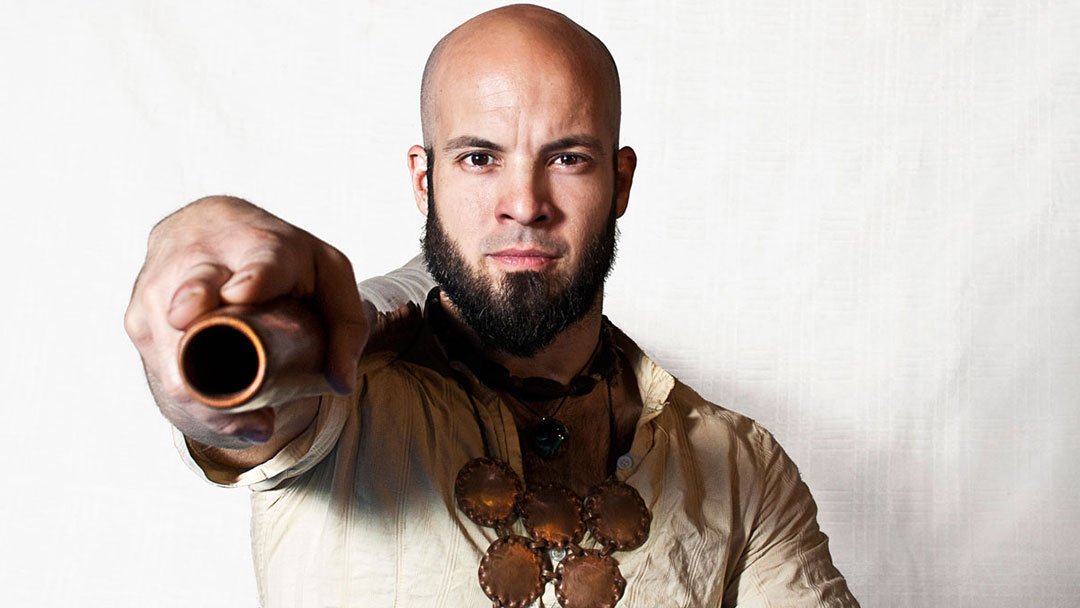
We all have our playing habits. And you surely know how hard it is to break out of them. It’s the classic pattern of the player going round in circles. In this new episode (in French), I wanted to break down for you the playing mechanics of Dubravko Lapaine, a Croatian player with a very particular style. You’ll see that beyond his habits, his style is a coherent whole that both defines him and shapes him. By the end of the podcast, you’ll understand how to develop your own listening so you can learn a lot about yourself and others!

Subscribe and hear about the next episodes!

Apple Podcasts (iPhone)

To go further, a few resources on the didgeridoo

• Podcast | Top 10 didgeridoo tracks that radically changed my playing
• Article | Didgeridoo in Europe: styles and players for each country

Find out more about Dubravko Lapaine

• Dubravko Lapaine’s website
• And the video I took the excerpts from for this podcast:
Photo source: Didjin’Oz

Free course

Speed up your phrasing with wobbles

Increasing your speed means learning to let go. When you do, you give your didgeridoo its rightful place, and all that’s left is to listen to it.

  • 8 videos
  • For you if you are going round in circles with your habits

5/5225 Google reviews

9991members

Read next

8 responses to “Why Dubravko Lapaine can only play like Dubravko Lapaine (analysis)”

  1. Patrick GARBOUS Avatar
    Patrick GARBOUS

    As usual, a very interesting and informative podcast. Thank you Gauthier.
    I’m not sure if this truly complements the podcast, but I wanted to point out that on YouTube you can search for “Dubravko Lapaine The interview”. It’s in English but you have the option to turn on subtitles. This interview lasts about 1h18.
    Otherwise, just a little reflection that’s just my own thought:
    if you watch (still on YouTube) tutorials by Dubravko LAPAINE, he seems like a very calm and composed person, someone who does things seriously without taking himself too seriously. And that contrasts with his “warrior” playing style. Does the didgeridoo bring out a hidden aspect in each of us? Or at least one aspect of our personality that’s just waiting to express itself.

    Automatically translated from French · See the original

    Comme d’habitude, un podcast très intéressant et instructif. Merci Gauthier.
    Je ne sais pas si cela complète véritablement ce podcast mais je voulais indiquer que sur YouTube vous pouvez taper “Dubravko Lapaine The interview”. Cela est en anglais mais il est possible de choisir l’option sous-titre. Cette interview dure environ 1h18.
    Sinon, juste une petite réflexion qui n’engage que moi :
    si vous visionnez (toujours sur YouTube) des tutoriels de Dubravko LAPAINE, celui-ci semble une personne très calme et posée, une personne qui fait les choses sérieusement sans trop se prendre au sérieux. Et cela contraste avec son jeu “guerrier”. Le didgeridoo ferait-il ressortir en chacun de nous un aspect caché? Ou du moins, un des aspects de notre personnalité qui ne demande qu’à s’exprimer.

    1. True, we all have our own perception of the guy and what he’s showing us.

      Then it’s up to each of us to form our own opinion. On my end, out of respect for my friend Dubravko, I didn’t want to go too deep into the details in this podcast.

      But we could easily refine the analysis. 🙂

      Automatically translated from French · See the original

      Effectivement, on a tous notre perception du bonhomme et de ce qu’il nous montre.

      À chacun ensuite de se faire son idée. De mon côté, par respect pour l’ami Dubravko, je n’ai pas voulu trop rentrer dans les détails dans ce podcast.

      Mais on pourrait facilement affiner l’analyse. 🙂

  2. GERALD Avatar
    GERALD

    he chose this style because he was attracted to a fast and punchy rhythmic pattern, breathing as you say goes hand in hand with it, what I got from your podcast is that by discovering other breathing techniques you can have in parallel other ways of playing.

    so the fast rhythmic pattern, meditation, etc… asks us to have at our disposal several breathing techniques in order to give us a greater choice in our playing

    Automatically translated from French · See the original

    il a choisi ce jeu parce qu’il était attiré par une rythmique rapide et percutante, la respiration comme tu le dis va de paire avec , ce que je retiens de ton podcast c’est qu’en découvrant d’autres respiration tu peux avoir en parallèle d’autres facon de jouer.

    donc la rythmique rapide, la méditation, etc… nous demande d’avoir a notre connaissance plusieurs respiration afin de nous apporter un plus grand choix dans notre jeu

    1. Exactly, that’s precisely it. In any case, those are my conclusions from all my years of research. Our breathing shapes our playing.

      Automatically translated from French · See the original

      Effectivement, c’est exactement ça. En tout cas, ce sont mes conclusions de toutes mes années de recherches. Notre respiration conditionne notre jeu.

  3. jaime Avatar
    jaime

    Thank you Gauthier for this magnificent podcast!!!
    I spent some time thinking and analyzing the way I breathe when I play didgeridoo, and it’s exactly the same way I live…
    I live the way I breathe or rather I breathe the way I live…

    Lots of little inspirations, afraid of running out of air, and breathing in way too hard… Like the guy who stocks up reserves, and then ends up blocked with way too much air in his lungs…

    Transpose that to my life, and you get someone who buys lots of reserves for fear of running out of rice, sugar, everything you can think of… who buys everything in multiple copies for fear of running short… And who ends up suffocated by all his reserves everywhere…

    I want to free myself from this!!!!! help!!!!!

    Automatically translated from French · See the original

    Merci Gauthier pour ce podcast magnifique !!!
    J’ai un peu penser et analyser la façon avec laquelle je respire quand je joue du didgeridoo, et c’est exactement la même façon avec laquelle je vis…
    Je vis comme je respire ou plutôt je respire comme je vis…

    Plein de petites inspiration, de peur de manquer d’air, et en inspirant beaucoup trop fort… Du genre le gars qui fait des réserves, et après qui se retrouve bloqué avec justement trop d’air dans les poumons…

    Transposes ça dans ma vie, et tu obtiens quelqu’un qui achète plein de réserve de peur de manquer de riz, de sucre, de tout ce que tu veux… qui achète tout en plusieurs exemplaires de peur de manquer… Et qui finit étouffé par toutes ses réserves de partout…

    Je veux me libérer de ça !!!!! au secours !!!!!!

    1. Haha nice analysis! 🙂 Now just gotta spread some rice around here and there.

      Automatically translated from French · See the original

      Ahaha pas mal l’analyse ! 🙂
      Y a plus qu’à donner un peu de riz à droite à gauche.

  4. Elisabeth Blanc Avatar
    Elisabeth Blanc

    Very interesting analysis of Dubravko’s playing, Gauthier – we learn to listen differently. 🙂

    Automatically translated from French · See the original

    Très intéressante, cette analyse du jeu de Dubravko, Gauthier, on apprend à écouter différemment. 🙂

    1. Thank you Elisabeth! There’s a small bias to listening like that: you end up no longer hearing the didgeridoo, but only what’s behind it. But it really builds a strong musical approach!

      Automatically translated from French · See the original

      Merci Elisabeth ! Il y a un petit biais à écouter comme ça : on fini par ne plus entendre le didgeridoo, mais uniquement ce qu’il y a derrière. Mais ça forge bien l’approche musicale !

Leave a Reply