



When you start a new activity, you never know in advance what you’re really going to learn. Beyond music, here are five big life lessons I learned thanks to the didgeridoo. Not long ago, Nathalie, a beginner player, wrote to me asking how I had experienced my early days on the didgeridoo. I was about to answer her when I thought I could do it as an article instead. When you can share with as many people as possible, why hold back?! What’s funny is that this question about my beginnings comes at a rather special moment in my journey. Indeed, this 25 December 2016, it will be 15 years to the day that I’ve been playing the didgeridoo. So we’ll start at that moment: getting my first instrument.
Discovering the didgeridoo thanks to Kaophonic tribu
But before telling my little story, let’s set the scene of the time.
It’s November 2001, I turned 18 in July. In the evenings, I deliver pizzas for Pizza Hut to earn a crust and pay my rent. During the day, I go to high school, a stone’s throw from the flat I share with a girlfriend.
I repeated my first year of high school, then my second, and I’m now starting my second year all over again… In short, I’m going round in circles.
High school bores me to death and I really wonder what it’s giving me.
Then one morning unlike any other, I realise my life would be absolutely amazing if I could keep only the pizza delivery in the evening. That tells you how much boredom was colouring my life! I then remember what my parents always told me: “At 18, you’re an adult, you do what you want, as long as you take responsibility for it.”
But of course!
Without a second thought, I quit high school and dive into my new life full of pizzas and friends. What joy!
And it’s precisely at that moment that I discover the didgeridoo. Thanks to Paul, my dear twin brother who, coming back from a concert, had bought me the Kaophonic Tribu album. Giving it to me, he said: “You should listen to it, there’s didgeridoo on it. I’m sure you’ll like it.” Good intuition, bro. A month later, I got my first didgeridoo for Christmas.
THE Kaophonic track that made me love the didgeridoo. I loved the part at 3 minutes 19!
My very first sound on the didgeridoo
The emotion is strong. I’m happy and impatient.
Once the present is unwrapped, I rush to my old bedroom and try to blow, away from prying eyes. I have to say that at that point, I wasn’t a musician and I was almost ashamed to think I could make music.
When I think about it… I was limiting my life so much. Let’s be honest, friends: we’re all musicians, we’re all painters, creators, dancers, poets… Whatever our art, we all have the right to express it!
But back to that turning point. Alone in the room, I try to make my lips vibrate as best I can. Someone had quickly explained the principle to me, and after 10 minutes, a sound came. You can’t imagine the joy it gave me. I was starting to blow for the first time and it wasn’t about to stop.
Proud of myself, I quietly go back downstairs to carry on with the Christmas Eve party. I don’t remember if my family tried, but given the effect a didgeridoo has at a party, chances are they did.
What I do remember very well, however, is the next day. I was playing table tennis in the barn with Paul and I had leaned my didgeridoo upright against the wall. That’s when I heard the sound of dry wood slapping the floor… Ouch…
I turn around: the didgeridoo had slipped and ended up on the concrete floor. It was split. Oh, the pain!
Well, nothing serious in the end, because I was able to get it exchanged. Indeed, we had realised it was already cracked all over even before this unfortunate incident (hence the article on didgeridoos to avoid!).
Lesson no. 1: It’s through meeting people that we progress
Then the real story with my instrument begins, the everyday one. As everyone knows, after the magic of the first meeting, everyday life takes over and brings the relationship to life.
During the first month, honestly, it wasn’t easy. Yet I was happy living with it. When I got up, I saw it and it brought me a lot of joy. We had everything going for us! It and I were meant to be.
Jess, my girlfriend at the time, had brought me a didgeridoo method explaining the basics of playing. Jess played too, and to my great dismay, she had an incredibly rich sound (according to my beginner’s ear!). Mine was rather thick and slobbery, far from Jess’s subtle richness… I didn’t understand. My sound was ugly. As for her, she even managed to get amazing sounds by shouting into the instrument (a few months later, I realised that shouts weren’t that hard to produce!). Anyway, I felt pretty dull!
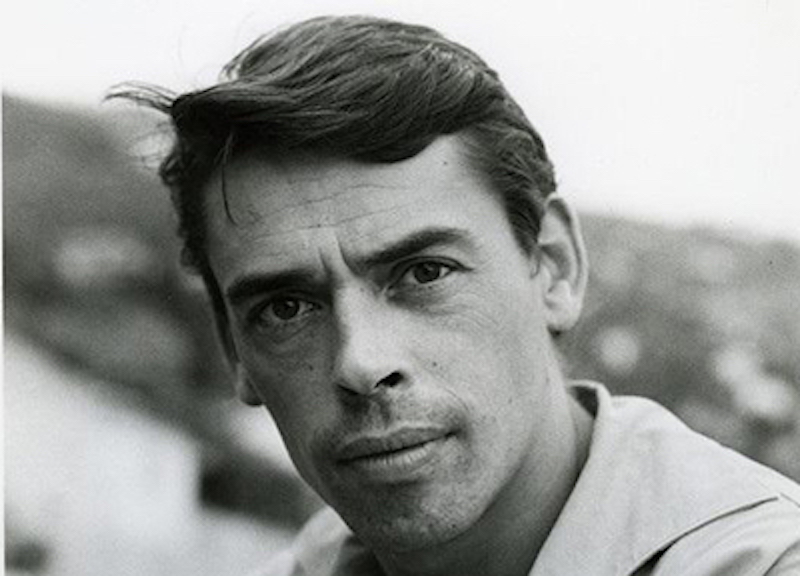
It bothered me all the more because deep down I felt a connection with this instrument. I hoped I had found my thing, but I didn’t seem gifted at all! Haha, there’s the irony of the story. Had I been given the desire without the talent? No, not necessarily, because as Jacques Brel put it so well: “Talent doesn’t exist. Talent is wanting to do something.”
• • •
“Talent doesn’t exist. Talent is wanting to do something.”
• • •
On the other hand, I was missing one essential thing in my journey: meeting people. I was isolated in my practice. I had no one to lean on.
So I drew my first big lesson from it: it’s through meeting people that we progress.
Learning in the school of life
A month goes by, and I’ve understood circular breathing very superficially thanks to the method Jess had brought me. But my sound is still just as slobbery and ugly. Then a friend tells me about a didgeridoo association that meets every week in the town centre. I’m saved!
Without a second thought, I go the following Thursday. Under an archway on place Emile Zola, cobblestones lead to an inner courtyard. On the left, a small door pierces a large windowless building. I’ve got stage fright. I can hear the bass vibrations already coming through the walls. The door opens and reveals a new world, my new world. At that moment, I didn’t yet know it would colour my whole life.
In this room that looks like a barn in the middle of town, some are blowing into their instruments, some are juggling with clubs and others are drinking to their health. It’s in this world that I was going to be propelled into playing the didgeridoo. I had found a new school here, much richer to my taste than boring high school.
Thursday was for advanced players. As a beginner, I could come on Mondays. Jeff, one of the pillars of the association, gave lessons for newcomers there.
It was during one of these sessions that I understood something that was going to revolutionise the way I played: circular breathing sets the rhythm, not the other way round!
What I mean is that circular breathing is part of the rhythm. Until then, I made sounds while emptying myself of air, then I breathed at the end of the phrase, slowing my whole rhythm down. What a mistake! So that’s why I could never play a steady rhythm! I needed to breathe within the phrase with short breaths in. A revelation.
What am I saying! A revolution!

It was probably my biggest realisation, and it came thanks to Jeff. Jeff, if you’re reading this: thank you!
Lesson no. 2: Perseverance
At that time, there were three of us, brand-new beginners. My girlfriend had gradually dropped the didgeridoo. My brother Paul played a lot. However, for obscure reasons, we’d always had an unspoken agreement between us: if one of us threw himself fully into something, the other would step back. He drew, I didn’t. He played chess, I only dabbled. I played the didgeridoo, he blew now and then. So it wasn’t really Paul who made the biggest impression on me, even though he had a nice style!
No, it was Dorian. Dorian, like Jessica, learned fast. He had a didgeridoo with a powerful sound and managed to pull off impressive phrasing. I felt tiny next to him. After just a few months, he already had a technique that seemed very impressive to me. I was starting to accept that I was a slow beginner. And I understood that I simply needed a lot of hours of practice to progress. Which I did.
Our trio lasted about two years. We even ended up starting a little band we called “Yidaki”. But then Dorian went his own way, Paul bought a van to go roaming around, and I found myself alone, still blowing.
This taught me a second lesson: perseverance.
It doesn’t matter whether you’re gifted or not at the start. What matters most is to persevere. A rather ordinary sentence to read; the key is to live it.
• • •
“By persevering, one achieves everything.” Theocritus
• • •
Lesson 3: Find your own challenge
At that point in my life, you couldn’t say I was the calmest and most stable human being. My teenage years hadn’t been without bumps and had left a few wounds I was trying hard to find balms for.
When I played my instrument, it nourished me. I played so much that my friends no longer saw me, they heard me. I was always with my didgeridoo and I’d quickly slip away to go and play. I even remember one of them saying: “Gauthier, since you started playing the didgeridoo, we never see you anymore.”
That said, something else was playing along with me: my desire to be recognised (one explains the other, read the article: how to make sure you lose your passion for the didgeridoo).
At the association, there was Greg. Greg was my mentor. You know, the one who’s got class. You don’t see him much, but people talk about him a lot. When he came, it was: “Wow, Greg’s here tonight”. He impressed me so much and I loved his playing. He played in several local bands, was older than me, studied music. In short, he was a kind of legend in my eyes.
I was rather reserved with Greg and tried not to show my admiration too much. I was waiting for my mentor’s recognition. But of course it didn’t come, or at least, not the way I imagined. At that time, I doubted who I was so much that I became a bit paranoid. So I ended up interpreting one of Greg’s reactions as if he despised me (talking with him years later, I realised I had completely made it up!).
Anyway, that day I decided to become better than him, maybe out of revenge… I don’t really know. Either way, that’s how it was, and it gave me a challenge to move forward.
So that’s the third lesson: find your own challenge.
While steering clear of the traps of competition, having a challenge to take on is very motivating to play regularly. It’s up to you to find yours!

Lesson 4: Always trust your intuition and check for yourself
And then there was the first Rêve de l’Aborigène festival in July 2002. For me, it was a big discovery. I won’t go over again what I already wrote in the article: Le rêve de l’Aborigène: 15 years of memories) . But overall it was the same feelings as when I discovered the association, except that we weren’t 10 players, but hundreds.From this festival came the first player gatherings, then the first workshops. This big movement was going to shape a still rudimentary knowledge into a common language.
Meeting all these players, I was able to exchange, listen to techniques, ask questions. And very often, when a player explained their technique, something inside me told me they were making a mistake in their analysis. Of course, I had little perspective on playing, but I listened to my little voice. So I spent many hours trying to break down the techniques I heard here and there. All of this shaped a certain spirit of research that led to writing my didgeridoo method years later.
Which brings us to the fourth lesson: always trust your intuition and check for yourself.
• • •
“Theories have caused more experiments than experiments have caused theories.” Joseph Joubert
• • •
It’s not enough to listen to more experienced players and follow them blindly to progress. Above all, you have to check it through experience.
Let’s listen to our little voice, it whispers great secrets to us (also read: From intuition to reason: the path to becoming Gandalf on the didgeridoo!).
Lesson 5: Playing isn’t enough to progress, you have to immerse yourself
It goes without saying that at that time I played a lot, several hours a day. But what’s even more important is that I played without playing. I lived didgeridoo, I thought didgeridoo, I sang didgeridoo, I breathed didgeridoo.

Sitting on my Pizza Hut moped, dressed as a little black and red delivery guy, I’d even test the power of my shouts. When I passed a pedestrian, I’d let out a shout like in my didgeridoo. Then I’d look in my moped’s mirror to check if they turned around. If they did, I considered my shout powerful enough. I’d then do it again with the next pedestrian. Yes, I was all in!
That’s the fifth lesson: playing isn’t enough to progress, you have to immerse yourself. (I talk about it in the 10 tips for getting started on the didgeridoo.)
Let’s take stock
If I’m telling you all this, it’s not to spread my life all over the internet. Of course, I could have just told you how many hours a day I played or some other juicy detail, but do you think that would have been enough? Actually, I have absolutely no memory of how long I played each day. I’d be telling you nonsense!
Every event happens in a life context. Our reactions depend on that context, based on our own story. My whole didgeridoo journey inevitably has to be put back into the world of that time. To see more clearly, let’s sum up this little piece of history:
- I was 18.
- I had no qualifications.
- I was doing odd jobs with no future.
- I was consumed by a need for recognition.
- I was thirsty to express something rumbling inside.
- I had a spirit of research.
- I wanted to understand.
In conclusion
Looking more closely, I had all the colours to paint my life in music. All the same, let’s admit it, life is a genius! It has a gift for surprising us and bringing us exactly what’s right at every moment. Impressive.
Now it’s important to ask yourself: who are you? What do you have to say? What motivates you? What’s your challenge? What nourishes you? What colours do you want to give your life?
No need to force yourself to practise your instrument for hours a day if you don’t feel like it.
Just do what makes you happy!
And if you’d like to share your beginner experience or memories, comment on this article. I’ve told you before, your comments are very encouraging! Thank you!

Leave a Reply
You must be logged in to post a comment.