


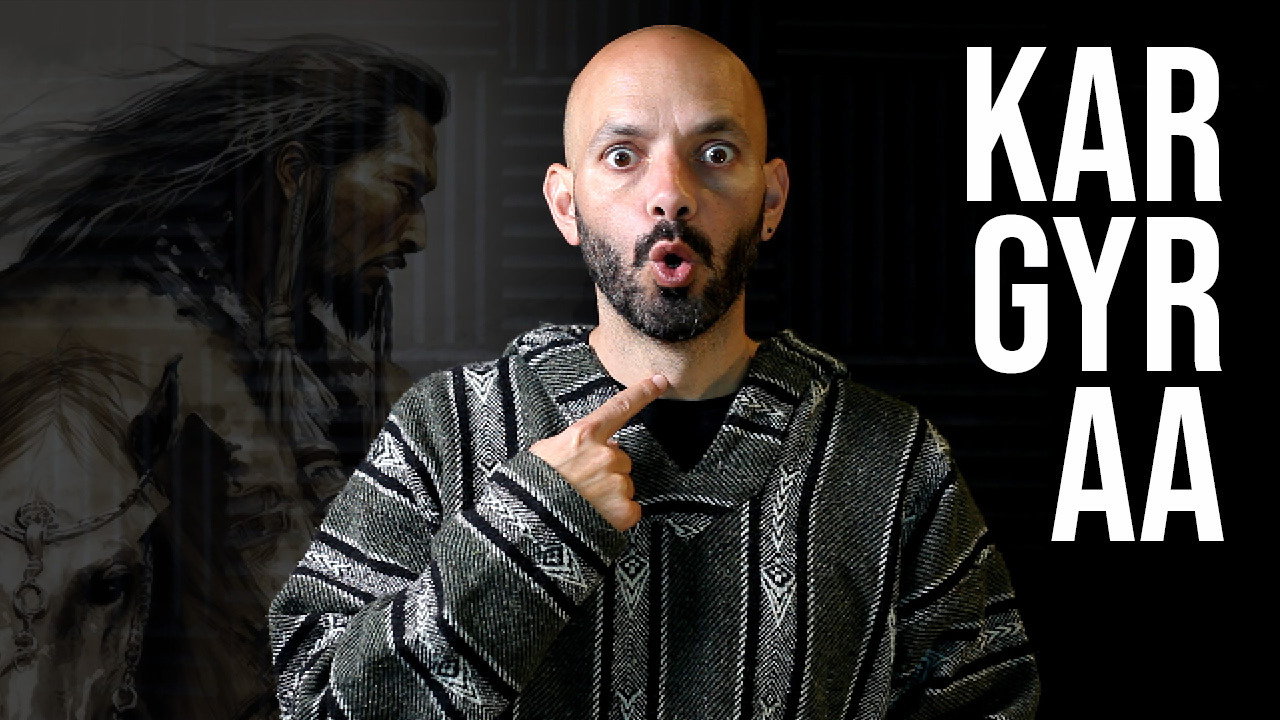
Kargyraa overtone singing, which comes from Mongolia and Tuva, is a fascinating vocal art form that, although it may sound strange to Western ears, offers unmatched depth and emotional resonance. I invite you to discover what makes it special, and I’ll also give you a few keys to start practicing it yourself.
First things first: what is kargyraa?
Also known as deep khöömii, Kargyraa is a guttural overtone singing style. This Mongolian vocal technique produces low, deep sounds, reminiscent of the timbre of the didgeridoo (which you know well here!) but also of wild animals or even thunder. Kargyraa masters find their inspiration in imitating the whistling of the wind and its echoes in the mountains. This practice is firmly rooted in Mongolian nomadic culture, which values the connection with a natural environment arranged in layers, from the underground to the celestial.
In fact, the Mongolian conception of timbre reveals a singular approach to using the body in relation to the environment, expressed through learning and evoking verticality. This unique perspective unfolds on several levels, illustrated by elements such as traditional vertical writing, the cairns scattered across the steppe that act as spatial landmarks, and the way humans interact with the supernatural, which also shapes the perception of space inside the yurt. The sounds of water also play a crucial role in shaping Kargyraa and overtone singing, as practitioners often strive to imitate the gentle murmur of a stream or the roar of a river to perfect their technique.
But how do you practice Kargyraa?
Also nicknamed throat singing, Kargyraa is a unique vocal technique that creates a tone one octave below the modal voice. This effect is achieved by making the vocal cords (vocal folds) and the false vocal cords (ventricular folds) vibrate at the same time. Training in Kargyraa requires a fine touch with resonance, resulting in a complex, captivating melody characterized by rich harmonics and subtle sound nuances. Mastering this vocal technique requires excellent control of breath, voice and body.
But to give you a better idea, I’ve prepared a video demonstration for you (+ the explanations I give you further down in the article):
3 essential steps for a powerful Kargyraa
1. Master your breathing
Just like with the didgeridoo, breathing is the pillar of all overtone singing, and therefore of Kargyraa. Cultivating broad, controlled breathing is key to producing low, deep sounds. Training abdominal and diaphragmatic breathing will strengthen your breathing capacity and support more powerful vocal performances. So here’s a good technique to work on between your didgeridoo sessions. 😉
2. Train your false vocal cords to vibrate
Kargyraa requires exceptional coordination between the vocal cords and the false vocal cords. To develop this coordination, I suggest seven sounds to imitate, all in the bass register (choose the one that speaks to you most):
- A deep cough: By imitating a deep cough, you’ll discover the sensation of your false vocal cords vibrating. To get a low, deep tone, extend this vibration by relaxing your throat muscles.
- The sound of a motorbike: To reproduce the purr of a motorbike, focus on a deep, steady vibration. You can adjust the intensity and frequency of the vibration by varying the air pressure.
- The sound of a jackhammer: Imitating a jackhammer involves an intense, rhythmic vibration. Start gently and gradually increase the intensity of the vibration by slightly tightening your throat muscles.
- The gurgling of a sink drain: To reproduce this sound, create a vibration similar to the one made by water flowing down a sink drain. Focus on a deep, steady vibration to capture the resonance of this sound.
- The rumble of distant thunder: Imagine thunder rumbling in the distance. To imitate this sound, try to produce a low, continuous vibration while controlling its intensity.
- The hum of a double bass: The double bass produces a low, resonant sound. Try to reproduce this hum by making your false vocal cords vibrate, which will create a rich, deep sound.
- The roar of a lion, a tiger or a bear: By imitating their roars, you explore the vibration of your false vocal cords with the aim of producing low, deep tones.
- The drone of a didgeridoo: We’re on Wakademy here, so you can just as well imitate the didgeridoo drone; it will also help you work on a deep vibration.
3. Play with resonance
Resonance is a crucial part of Kargyraa. If you’re looking for a smoother, more controlled vocal practice, don’t neglect the details of articulation, such as the use of the lips, the tongue, the soft palate and the height of the larynx. Think of these aspects as brushes sculpting the work of your voice. By consciously adjusting these elements, you’ll perfect your technique.
To deepen your Kargyraa practice (and overtone singing in general)
If you’re ready to go deeper in your practice, I have several options for you.
First, you can follow this free tutorial in which I explain the 3 essential keys in more depth. Then, here’s the link to my YouTube channel, where I give lots of advice on overtone singing.
And finally, if you want to take your learning much further and start practicing overtone singing seriously, I invite you to check out my online course, L’Art du Chant Diphonique, or to have a look at our personalized mentoring program, Overtone Singer (structured in six separate modules and twelve individual sessions).
Kargyraa is a demanding technique that takes real commitment, but patience and determination lead to deep, moving musical experiences… As for me, practicing overtone singing has literally transformed my life, and of course I hope that you, in turn, have wonderful experiences with Kargyraa singing!
I can’t wait to read your feedback!

Leave a Reply
You must be logged in to post a comment.