

Skip to content

The musical world of Graham Wiggins, inventor of the keyed didgeridoo

This episode is in French. My podcast is only available in French for now.

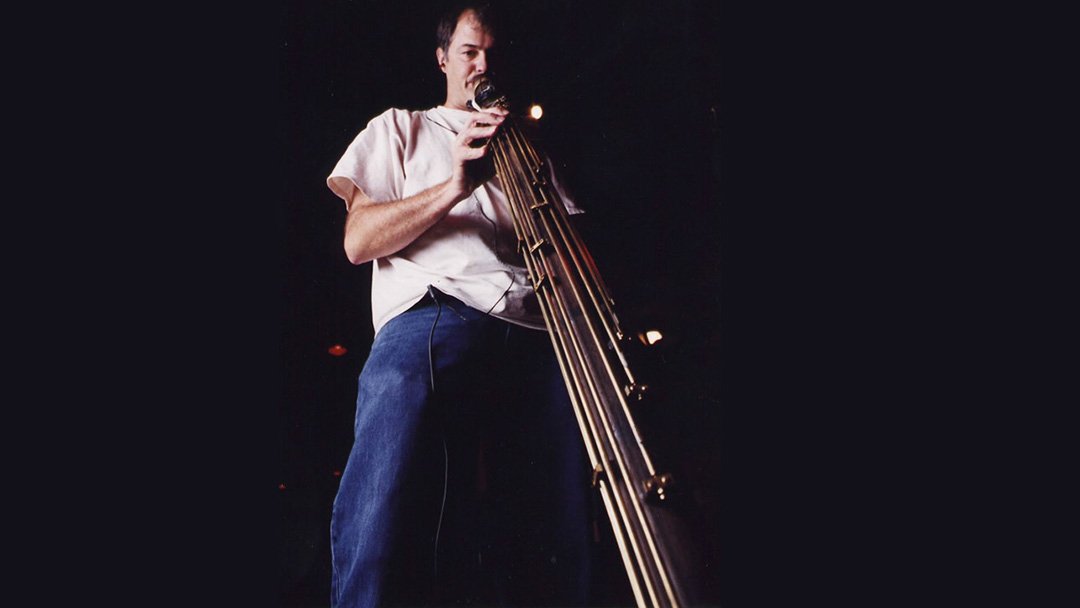
Graham Wiggins (1962 – 2016) belongs to the first generation of didgeridoo players. This didgeridoo pioneer, also known as Dr Didg, built the first (and only?) keyed didgeridoo back in the 80s. This device gave him no fewer than 9 notes under his fingers, without any slides. A quick tour of this astonishing, overlooked invention and of his musical world, made up of 16 albums split between two projects: Outback and Dr Didg. Enjoy the episode (in French)!

Subscribe and hear about the next episodes!

Apple Podcasts (iPhone)

Find out more about Graham Wiggins

• His Wikipedia page
• The “Dr Didg” website is still online here

A video tribute to Graham Wiggins


Graham Wiggins, aka Dr Didg, on his keyed didgeridoo


An appearance on the TV show “Tomorrow’s World” with his band Outback

A few resources on the didgeridoo

• Podcast | Why Dubravko Lapaine can only play like Dubravko Lapaine (analysis)
• Several notes in one instrument: a quick tour of slide didgeridoos!

Photo credit

NB: This podcast is meant as a tribute to Graham Wiggins. I of course hope I haven’t said anything that goes against his memory. If that were the case, please don’t hesitate to contact me.
Free course

Circular breathing in just a few days

Explanations that are clear, practical (!) and progressive. You’ll be surprised to see it’s simpler than it looks!

  • 7 videos in 4 steps

5/5225 Google reviews

9991members

Read next

8 responses to “The musical world of Graham Wiggins, inventor of the keyed didgeridoo”

  1. Adrien B Avatar
    Adrien B

    Thank you Gauthier for this podcast, it’s through the sounds of Outback that I awakened to the didg, a pleasure to discover Graham Wiggins more deeply.

    Automatically translated from French · See the original

    Merci Gauthier pour ce Podcast, c’est au sonorité de Outback que je me suis éveillé au didg, un plaisir de découvrir plus en profondeur Graham Wiggins.

    1. With pleasure Adrien! 🙂

      Automatically translated from French · See the original

      Avec plaisir Adrien ! 🙂

  2. Yves Grevet Avatar
    Yves Grevet

    Thank you so much!

    Automatically translated from French · See the original

    Merci beaucoup !

  3. Christophe Avatar
    Christophe

    Interesting podcast, Gauthier 🙂
    Although I’m no specialist, here’s my little comment on Nico’s question.
    The tuba is indeed the descendant of the ophicleide you mention, Gauthier (pronounced “ay-ee-klyd”), but it has a piston system like trumpets that acts as a switch and lengthens or shortens the tube length and thus the note.
    The ophicleide, on the other hand, simply has holes that are opened or closed by valves.
    You can see in the 2nd video that Graham uses the same principle of holes and valves, the holes being spaced apart, the valves are controlled by keys and a rod system.
    It’s the same system used on saxophones or clarinets, or more simply flutes where the holes are close enough and small enough to do without valves and use the fingers directly.

    Automatically translated from French · See the original

    Intéressant ce podcast Gauthier 🙂
    Bien que je ne sois pas un spécialiste, voici ma petite remarque sur la question Nico.
    Le tuba est bien le descendant de l’ophicléide dont tu parles Gauthier (prononcer “éïde”), mais il a un sytème de pistons comme les trompettes qui agit comme un aiguillage et rallonge ou raccourci la longueur du tube et donc la note.
    L’ophicléide, lui, a simplement des trous, qui sont ouverts ou fermés par des clapets.
    On voit sur la 2e video que Graham utilise le même principe de trous et clapets, les trous étant éloignés, les clapets sont commandés par des touches et un sytème de tringles.
    C’est le même système utilisé sur les saxo ou les clarinettes, ou plus simplement les flutes où le trous sont suffisamment rapprochés et petits pour se passer des clapets et utiliser directement les doigts.

    1. Thanks Christophe for your answer and clarifications, my knowledge in this field is more than limited! 🙂

      Automatically translated from French · See the original

      Merci Christophe pour ta réponse et tes précisions, mes connaissances dans ce domaine sont plus que limitées ! 🙂

  4. NicoB Avatar
    NicoB

    Impressive didge sound, but how does the key modify the air column, do you have any info Gauthier?

    Automatically translated from French · See the original

    Impressionnant son didg, mais comment la clé modifie la colonne d’air, as tu des infos Gauthier ?

    1. That’s a good question… It must be the same mechanisms as brass instruments like the tuba for example (?). I’m guessing, but we’d need to look into it more. If you’re motivated, go for it! 😉

      Automatically translated from French · See the original

      C’est une bonne question… Ça doit être les mêmes mécanismes que les cuivres comme le tuba par exemple (?). J’imagine ça mais il faudrait aller rechercher plus d’infos. Si tu es motivé, fonce ! 😉

Leave a Reply